Natural beauty for your favorite space
What Are the Top 10 Eco Building Materials?
Eco Building Materials are often described as a simple path to greener construction. The real choice is more demanding. A material’s impact depends on where it comes from, how it is made, how far it travels, and what happens when a building is renovated or demolished. A beautiful bamboo floor may still carry a heavy footprint if it is shipped long distances or replaced quickly.
The United Nations Environment Programme and Global Alliance for Buildings and Construction reported that buildings and construction accounted for 34% of global energy demand and 37% of energy- and process-related carbon dioxide emissions in 2022. Those figures, published in the 2023 Global Status Report for Buildings and Construction, show why material decisions matter. They do not mean one product solves the problem. Details count.
Architect Carl Elefante, a former president of the American Institute of Architects and a sustainable-building advocate, is widely associated with the phrase, “The greenest building is the one that is already built.” His reminder puts reuse at the heart of material selection. It also prompts a useful question: can an existing structure or component serve longer?
This guide looks at ten options, including reclaimed wood, recycled steel, low-carbon concrete, hempcrete, rammed earth, cork, cellulose insulation, and recycled glass. It considers durability, sourcing, energy use, and end-of-life potential—not just product labels. Some choices look promising on paper. Their performance still depends on climate, design, and skilled installation. That sounds simple. It isn’t.
What Defines an Eco-Friendly Building Material?
An eco-friendly building material is not simply one made from natural ingredients. Its impact begins with extraction and processing, then continues through transport, installation, maintenance, and eventual reuse or disposal. A material shipped across an ocean may carry more transport emissions than a locally available alternative. But distance alone does not tell the whole story.
Look at what a material contains and how long it lasts. Low-toxicity finishes can reduce unwanted fumes indoors, while durable components may need fewer replacements. Reclaimed timber, for example, can avoid new harvesting, but it still needs inspection for moisture damage and safe reuse. Details matter. The same material can perform well in a dry room and fail where water regularly collects.
Useful evidence includes lifecycle assessments, verified sourcing information, and clear disclosures about ingredients and emissions. These documents help compare products, though their boundaries and assumptions can differ. No material is perfect. A low-carbon option that requires frequent repairs may not remain a better choice over decades. Climate, building design, local supply, and maintenance capacity all shape the decision. I would be cautious of broad “green” claims without measurable details; even a familiar, natural-looking product can involve energy-intensive processing or finishes that complicate reuse.
How to Assess Materials Across Their Life Cycles
What Are the Top 10 Eco Building Materials?
How to Assess Materials Across Their Life Cycles
A material’s environmental impact begins before it reaches a building site. Timber, bamboo, cork, hemp-lime, cellulose insulation, reclaimed wood, recycled steel, recycled glass, clay brick, and lower-carbon concrete each have different impacts. Check how raw materials are sourced, how much energy manufacturing requires, and how far products travel. A recycled material is not automatically the better choice if processing is energy-intensive or transport is extensive.
Look for an environmental product declaration, then check its scope and assumptions. Compare products using the same declared unit, such as one square metre of insulation at a stated thickness. Include installation waste, maintenance, expected service life, and end-of-life options. A material that can be reused or recycled may have an advantage, but only when local recovery systems exist. Real conditions matter. Timber in a persistently damp wall may need more maintenance than its initial footprint suggests. That trade-off is easy to miss. Designers should also consider indoor air quality, repair access, and whether materials can be separated during renovation. Data can be incomplete, and life-cycle estimates rely on assumptions. Record those uncertainties rather than treating one score as a final answer.
What Are the Top 10 Eco Building Materials?
Indicative embodied carbon for lower-impact material options
Values are screening-level estimates of cradle-to-gate greenhouse-gas emissions (A1–A3), in kg CO₂e per kg of material—not product-specific Environmental Product Declaration results. Actual impacts vary with sourcing, manufacturing, transport, and biogenic-carbon accounting. To assess a material across its full life cycle, also consider durability, maintenance, replacement, reuse, and end-of-life impacts.
Renewable Choices: Bamboo, Cork, Straw Bale, and Hempcrete
Eco-building materials work best when they fit the site, not just a sustainability checklist. Bamboo grows quickly and can provide flooring, panels, or structural components when properly engineered. Durability still depends on harvest practices, adhesives, and protection from moisture. Fast growth alone is not enough. Cork comes from the bark of cork oak trees, which can regrow after harvesting. Used in flooring and insulation, it feels resilient underfoot and helps limit heat transfer. Quality and environmental impact vary with processing and transport. That part gets overlooked.
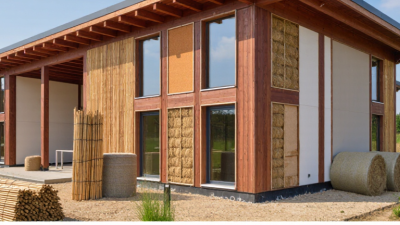
Straw-bale walls reuse an agricultural by-product and can provide substantial insulation when kept dry and detailed carefully. Deep window reveals and thick walls are visible trade-offs, not defects. Gaps, roof overhangs, and effective moisture control matter during construction. Hempcrete combines hemp shiv, a lime-based binder, and water to form lightweight infill. It can buffer indoor humidity and insulate, but it is generally not a load-bearing frame by itself. Allow adequate drying time. Performance varies with mix, thickness, and climate, so check material data against the actual project. Even experienced builders can get this wrong.
Reused Materials: Reclaimed Wood, Recycled Steel, and Recycled Plastic
What Are the Top 10 Eco Building Materials?
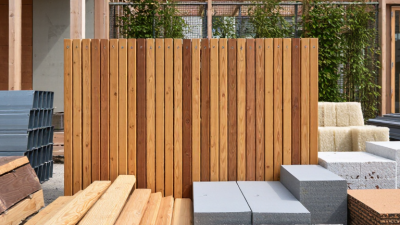
Reused materials can reduce demand for new resources while bringing visible character to a building. Reclaimed wood may come from old floors, barns, or dismantled framing. Its grain, nail holes, and uneven color can add warmth, but appearance alone does not prove it is suitable. Check its history, moisture condition, and possible coatings or pest damage. For structural use, have the timber graded by a qualified professional. Some boards need more preparation than expected.
Recycled steel is strong and can often be recycled again at the end of its service life. Ask suppliers for documentation about recycled content and confirm that the steel meets project specifications. Recycled plastic can serve in items such as decking or site furnishings, but its strength and heat response vary by composition. It is not automatically the best choice for every application. Compare durability, maintenance needs, and the material’s likely end-of-life options.
Tips: Request test data and clear sourcing records. Inspect samples in daylight; recycled materials can vary between batches. Keep a small reserve for repairs. That can cost more upfront, but matching an unusual finish later may be difficult. When in doubt, get a specialist’s assessment before installation.
Low-Impact Options: Rammed Earth, Cellulose, and Recycled Concrete
What Are the Top 10 Eco Building Materials?
Low-Impact Options: Rammed Earth, Cellulose, and Recycled Concrete
Rammed earth turns compacted soil into thick walls with a calm, textured finish. Its thermal mass can soften indoor temperature swings, especially when the design accounts for local weather. But it is not suitable everywhere. Walls need careful detailing against rain, and the right soil mix matters.
Cellulose insulation, often made from recycled paper, can fill awkward cavities around pipes and framing. Installers need to keep it dry and distribute it evenly; thin spots can weaken performance. Small gaps matter. Recycled concrete can replace some newly quarried aggregate in foundations or paths. Its quality varies, so ask about strength, grading, and the material’s previous use. I would not call any material automatically green; transport distance and installation waste count, too.
Tips: Compare materials for your climate and the whole project, not just their labels. Ask suppliers for test data and recycled-content details. Keep samples. A slightly imperfect finish may be worth accepting when it avoids unnecessary new materials.
What Are the Top 10 Eco Building Materials? — Low-Impact Options: Rammed Earth, Cellulose, and Recycled Concrete
| Material | Typical Source | Common Applications | Potential Environmental Advantage | Practical Considerations |
|---|---|---|---|---|
| Rammed Earth | Moist soil compacted in layers, sometimes with a small amount of stabilizer | Exterior and interior walls | Can use locally available soil and generally requires less processing than many manufactured wall products. | Performance depends on soil composition, wall design, weather protection, and the amount and type of stabilizer used. |
| Cellulose Insulation | Processed recycled paper fibers, commonly recovered from newsprint | Attics, wall cavities, and roof spaces | Uses recycled fiber and can reduce heating and cooling demand when correctly installed. | Requires appropriate air sealing and moisture control; installation quality affects thermal performance. |
| Recycled Concrete Aggregate | Crushed concrete recovered from demolished or renovated structures | Road sub-bases, drainage layers, landscaping, and some new concrete mixes | Can reduce demand for virgin aggregate and divert concrete rubble from disposal. | It replaces aggregate, not the cement binder. Suitability depends on grading, contamination, and project specifications. |
| Reclaimed Wood | Timber salvaged from buildings, bridges, or other structures | Flooring, structural elements, cladding, doors, and interior finishes | Reuses existing material and can reduce demand for newly harvested timber. | Check structural condition, previous treatments, pests, and the availability of matching sizes. |
| Straw Bale | Compressed straw left after grain crops are harvested | Insulated wall assemblies and non-load-bearing infill | Makes use of an agricultural byproduct and can provide substantial insulation in suitable assemblies. | Needs careful detailing against rain and ground moisture, plus locally appropriate fire and building-code review. |
| Cork | Bark harvested from cork oak trees, which can regrow bark after harvesting | Flooring, wall finishes, and thermal or acoustic insulation | Harvesting bark does not require felling the tree, and cork is a renewable biological material. | Environmental performance varies with processing, binders, transport, and the product’s service life. |
| Bamboo | Fast-growing grass harvested in managed growing areas | Flooring, panels, cabinetry, and some engineered structural products | Can regrow rapidly after harvesting and may provide a renewable alternative to some timber products. | Transport distance, adhesives, manufacturing, and responsible harvesting practices affect its overall impact. |
| Hemp-Lime | Hemp shiv mixed with a lime-based binder | Insulating wall infill, roof insulation, and floor build-ups | Uses a plant-based aggregate; hemp can take up carbon while growing, though whole-life carbon results depend on the full assembly. | Usually functions as non-load-bearing infill and needs suitable detailing, curing time, and moisture management. |
| Recycled Steel | Steel made with recycled scrap, often combined with other feedstocks | Frames, reinforcement, roofing, and connectors | Recycling can reduce demand for virgin raw materials; steel is also recyclable at the end of a building’s life. | Manufacturing energy and the recycled share vary. Specify structural performance and consider corrosion protection. |
| Low-Carbon Concrete | Concrete using reduced-clinker binders, supplementary cementitious materials, or optimized mix designs | Foundations, slabs, walls, and structural elements | Reducing Portland cement content can lower a major source of concrete’s embodied emissions. | Available mixes and performance vary by region; confirm strength, curing requirements, durability, and local supply. |