
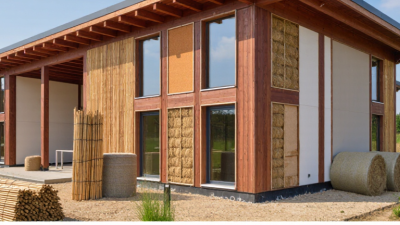
Natural beauty for your favorite space
How to Source Renewable Building Materials in 2026
Renewable Building Materials are becoming a practical sourcing question for architects, contractors, and owners planning projects in 2026. The stakes are substantial. The 2023 Global Status Report for Buildings and Construction, by UNEP and GlobalABC, found that buildings consumed 34% of global energy and produced 37% of energy- and process-related carbon dioxide emissions in 2022. The World Green Building Council’s 2019 report, Bringing Embodied Carbon Upfront, estimates that embodied carbon accounts for about 11% of global emissions. These figures make material choices hard to treat as a finishing detail.
But “renewable” is not a guarantee of low impact. Timber, bamboo, and bio-based insulation can have very different footprints depending on harvesting, processing, transport, and service life. A product’s label is only a starting point. That distinction is easy to miss. Buyers need evidence, such as product-specific environmental product declarations, credible chain-of-custody records, and clear information about durability and replacement. Where data is missing, acknowledge the gap rather than treating an attractive claim as proof.
A sound sourcing plan begins with the project’s location, performance needs, and available suppliers. Compare materials on a consistent life-cycle basis, check whether certifications cover the product being purchased, and ask how its renewable feedstock is managed. A nearby material may reduce transport, but distance alone cannot establish lower overall impact. Results depend on the details. This guide examines how to assess suppliers, verify claims, and balance carbon, cost, availability, and long-term performance—without pretending every “green” choice is automatically the right one.

Define Renewable Building Materials and Set Project Criteria
Renewable building materials come from biological resources that can regrow within a practical harvest cycle, such as responsibly managed timber, bamboo, cork, and straw. “Natural” does not automatically mean renewable or low-impact. Check where feedstocks grow, how quickly they regenerate, and whether harvesting protects soil and biodiversity.
Reclaimed timber can reduce demand for new resources, but it is reused, not renewable. That distinction matters.
The 2024 Global Status Report for Buildings and Construction, published by UNEP and the Global Alliance for Buildings and Construction, attributes about 34% of global carbon emissions to the buildings and construction sector. Set project criteria before specifying materials: require traceable sourcing, relevant environmental product declarations, and comparable life-cycle data.
Compare materials per square metre of finished assembly, not by kilogram alone. Include service life, maintenance, transport, moisture exposure, and fire performance. A low-carbon panel that fails in a damp wall is not a good choice.
Project teams may still lack consistent data; record assumptions and revisit them rather than treating estimates as facts.
Tips:
Ask suppliers for origin and chain-of-custody evidence. Request samples, then test them against actual site conditions. Set minimum performance thresholds before comparing prices. Leave room for judgment; a tidy scorecard cannot capture every local trade-off.
Identify Suitable Materials for Each Building Application
For 2026 projects, match each material to its actual building application. Foundations and ground slabs often need concrete; ask suppliers for mixes with lower clinker content and verified environmental product declarations (EPDs). Check curing time and strength against the construction schedule. Structural frames may use reclaimed steel when its grade and history are documented. Responsibly sourced timber can suit some roof structures, interiors, or low-rise frames. Moisture matters.
Insulation choices depend on cavity depth, fire performance, and local climate. Cellulose or other recycled-fibre products may fit some wall and roof assemblies, while recycled-content gypsum can work for interior partitions. Reclaimed brick is useful for suitable non-structural applications, but its dimensions and condition can vary. Details matter. UNEP and GlobalABC’s 2023 Global Status Report attributes 37% of energy- and process-related CO2 emissions to buildings and construction, underlining why material choices deserve attention.
Compare EPDs using the same declared unit and life-cycle boundaries; recycled content alone is not a reliable shortcut. The World Green Building Council’s 2019 report, Bringing Embodied Carbon Upfront, estimated that embodied carbon accounts for 11% of global emissions. That figure is broad, not a project-level prediction. Transport distance, durability, replacement rates, and installation all change the picture. The awkward trade-off: a lower-carbon option on paper may not be suitable for the application or available nearby. Verify before specifying.
| Building application | Renewable material option | Sourcing and specification priorities | Documents and checks | Key design considerations |
|---|---|---|---|---|
| Primary structure and floor or roof framing | Solid-sawn timber or engineered timber products | Confirm the species, structural grade, intended use, available sizes, and delivery lead time. Prefer traceable timber from legally managed forests and plan for efficient cutting to reduce waste. | Request structural grading information, chain-of-custody documentation where applicable, and a product-specific environmental product declaration (EPD) when available. | Design to applicable structural and fire requirements. Specify moisture limits, protected storage, and connection details before delivery. |
| Interior and exterior wall insulation | Cellulose insulation made primarily from recycled paper | Check the declared recycled content, density, installation method, and suitability for the wall or roof assembly. Source a product intended for the specified cavity or application. | Review the technical data sheet, installation guidance, fire-test information, and an EPD where available. | Confirm required thermal performance and account for settling in the specified installation system. Detail the assembly for air control and moisture management. |
| Wall, roof, or floor insulation | Straw-based insulation products or straw bales | Confirm crop origin, bale or product dimensions, density, moisture condition, and seasonal availability. Agricultural residues may be locally available, but supply can vary by harvest and region. | Request product specifications, moisture and quality criteria, fire-test information, and installation details appropriate to the selected system. | Keep material dry during transport, storage, and construction. Coordinate thickness, detailing, and protective finishes with the wall or roof assembly. |
| Non-load-bearing wall infill and internal partitions | Hemp-lime composite | Ask whether the supply is a site-mixed system or prefabricated element. Check constituent specifications, production location, curing requirements, and installer experience. | Request system-specific technical documentation, declared thermal properties, fire-test information, and an EPD if available. | Hemp-lime is generally used as non-load-bearing infill rather than as the primary structural frame. Allow for drying and coordinate finishes with moisture movement. |
| Interior linings and non-structural panels | Boards made from agricultural fibers, such as flax or straw | Verify the fiber source, binder composition, emissions data, thickness, and suitability for dry or humid locations. Confirm that the intended finish and fixing system are compatible. | Review product composition, indoor-emissions test results where required, fire classification, and product-specific environmental information. | Do not assume all plant-fiber boards are suitable for structural use or wet areas. Follow the manufacturer's installation and edge-protection requirements. |
| Flooring, wall finishes, and acoustic surfaces | Cork products | Identify whether the product is solid cork, cork agglomerate, or a composite. Check binder content, surface finish, origin, and suitability for the planned wear and moisture conditions. | Request composition and emissions information, technical performance data, and an EPD where available. | Cork bark can be harvested without felling the tree, but the environmental profile of a finished product also depends on processing, binders, transport, and service life. |
| Specialist structural elements and screens | Structural bamboo products | Confirm species, processing method, grading, adhesive or preservative content, and supply-chain traceability. Check that the product has documentation for the required structural use. | Request product-specific structural design data, relevant test reports, durability information, and emissions documentation for adhesives or treatments. | Do not treat ungraded bamboo as a direct substitute for graded structural timber. Design for local code acceptance, connections, moisture exposure, and fire performance. |
| Doors, cabinetry, and interior fit-out | Timber and wood-fiber products with verified sourcing | Specify the wood species, core material, surface finish, recycled content where relevant, and intended exposure conditions. Ask suppliers to identify composite-wood binders. | Request chain-of-custody information where applicable, formaldehyde or other relevant emissions data, and an EPD when available. | Match the product to expected wear, humidity, and maintenance. Include repairability and replacement of individual components in the specification. |
| Roofing and external envelope components | Timber products and bio-based insulation within a durable roof assembly | Source materials with documented exterior or concealed-use suitability. Confirm packaging, delivery sequence, temporary weather protection, and availability of replacement components. | Review durability and fire documentation for the complete specified assembly, not just individual materials. Request product-specific EPDs where available. | Prioritize drainage, ventilation where required, flashing, and construction-stage weather protection. Renewable content does not remove the need for a robust moisture-control strategy. |
Procurement note: Compare materials using product-specific documentation and the same declared unit and life-cycle scope. An EPD reports environmental information for a defined product and scope; it is not, by itself, proof that a product is renewable or preferable in every project.
Verify Renewable Content, Certifications, and Supply Chains
Renewable content is not proven by a product label alone. Ask suppliers for the percentage by weight, the calculation method, and whether the figure covers the whole product or only one component. Request current certificates and check their scope, expiry date, and exact product reference. A valid certificate may cover a factory or material category, not every item in a shipment. Paperwork can mislead.
Trace the material back through processors, distributors, and the production site. For wood, request species and harvest-region details, plus chain-of-custody records. For plant-based insulation or panels, ask where feedstock was grown and how batches are identified. Match delivery notes and invoices to the same product codes used in certificates. If documents use different names, pause and ask for a written explanation.
Check whether the supplier can provide batch-level records, not just a general sustainability statement. Compare declared renewable content with technical data sheets and, where practical, independent test results. A small sample can reveal coatings, binders, or layers that affect the calculation. I have seen tidy documents leave basic questions unanswered; that is a reason to investigate, not assume bad intent. Keep a record of answers, document versions, and unresolved gaps before specifying the material.
Assess Performance, Code Compliance, and Lifecycle Impacts
In 2026, assess renewable materials against the building’s actual loads, climate, and maintenance plan—not a sustainability label alone. UNEP and GlobalABC’s 2024 Global Status Report attributes 32% of global energy use and 34% of CO2 emissions to buildings and construction. The World Green Building Council’s 2019 report estimates that materials and construction contribute about 11% of global emissions. These figures make embodied impacts worth measuring, but they do not prove that one product suits every project.
Request current environmental product declarations and compare equivalent units, scopes, and life-cycle stages. Check manufacturing, transport, installation, replacement, and end-of-life impacts; an A1–A3 result alone misses later stages. Then verify structural, fire, moisture, acoustic, and thermal performance against the applicable local code and project specifications. Ask for test evidence, not just a claim. A bio-based insulation panel may look strong on paper, yet poor drying details can create costly problems. That matters. Reclaimed timber also needs grading and moisture checks before it carries a load. Expect trade-offs: a renewable option may require more maintenance or longer transport. Sometimes the data are incomplete. Record assumptions, compare realistic service lives, and revisit them before procurement.
Select Suppliers and Track Materials from Order to Installation
How to Source Renewable Building Materials in 2026
Choose suppliers who can explain where materials come from, how they are processed, and what documentation follows each shipment. Ask for environmental product declarations, sourcing records, and chain-of-custody documents when relevant. Check that product descriptions match the project specification, including dimensions, recycled or bio-based content, and performance requirements. A confident sales conversation is useful, but written evidence is more dependable.
Then track each material from order to installation with a shared log. Record the purchase order, supplier, product type, batch or lot number, promised delivery date, and approved substitutions. When a pallet arrives, compare its labels and quantity with the order; photograph damage or missing paperwork before signing off. Small gaps matter. Store moisture-sensitive materials under cover, and keep labels visible so crews can identify them later. Update the log when materials move to another area or are installed.
Close the record with installation dates, locations, and any unused or damaged quantities. This gives project teams a practical trail for handover and future maintenance. It also makes sourcing claims easier to check. Still, a tidy spreadsheet cannot prevent every mistake: deliveries change, and site teams may forget updates during a rush. Build in quick checks at receiving and installation, and assign one person to follow up on missing records. We have learned that the simplest tracking system is often the one people actually use.
How to Source Renewable Building Materials in 2026
Use project tracking to document material quantities, supplier claims, and delivery and installation milestones. The chart below provides U.S. construction and demolition waste context for planning material reuse.
U.S. Construction and Demolition Debris by Activity (2018)
What this means: Demolition accounted for most construction and demolition debris. For a sourcing plan, record reclaimed-material opportunities alongside renewable-material orders, then track each item from purchase order through delivery and installation. These figures describe debris generation—not renewable-material use.
Source: U.S. Environmental Protection Agency (EPA), Construction and Demolition Debris Generation in the United States, 2018. Shares are rounded.
Related Posts
-
How to Choose Environmental Building Materials?
-
What Are Renewable Building Materials?
-
Top Environmentally Friendly Building Materials for Buyers
-
Why Choose Innovative Sustainable Building Materials?
-
2026 Best Environmental Building Materials for Global Buyers
-

China Top Environmental Building Materials Manufacturers?