
ROCKin'teriors
Eco-Friendly stone fabrication and installation
Natural beauty for your favorite space
What Are Renewable Building Materials?
Renewable Building Materials come from resources that can naturally regenerate within a practical timeframe. Common examples include responsibly sourced timber, bamboo, cork, hemp, straw, and agricultural fibers. These materials can reduce reliance on finite resources when grown, harvested, manufactured, and transported responsibly. However, renewable does not automatically mean sustainable.
That distinction matters. A bamboo panel may grow quickly, yet adhesives, shipping, or poor moisture protection can reduce its environmental value. On a renovation site, details become visible: cork softens a room’s acoustics, timber gives a warm surface, and hemp insulation fills wall cavities with a light, fibrous texture. Practical performance still depends on installation. Moisture control, fire resistance, structural strength, and maintenance require professional assessment. Real performance matters.
Reliable decisions should consider lifecycle data, product certifications, local building codes, and manufacturer documentation. Standards such as Environmental Product Declarations can clarify embodied impacts, although comparisons are not always simple. Certification systems may support responsible forestry, but they cannot answer every question about transport or end-of-life disposal. Some claims also sound greener than they are. That deserves scrutiny.
This article explores what Renewable Building Materials are, how they perform, and where their limits appear. It also considers sourcing, durability, health, and lifecycle impacts. The subject is promising, but not perfect. A material can be renewable and still wasteful. Thoughtful design weighs evidence, local conditions, and long-term use rather than following a trend. That is the harder, more honest approach.
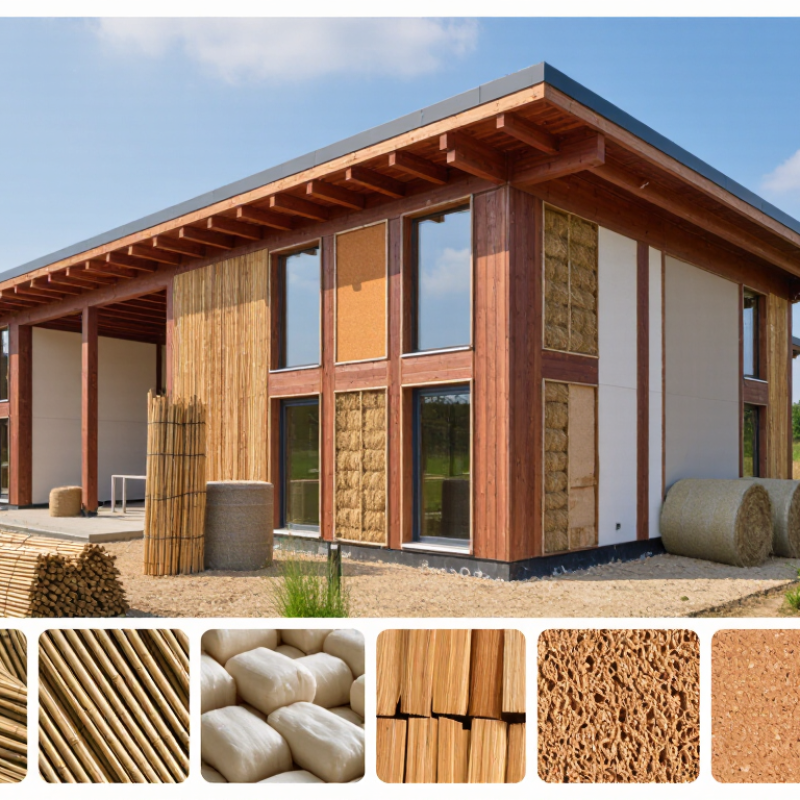
Definition and Core Principles of Renewable Building Materials
What Are Renewable Building Materials?
Definition and Core Principles of Renewable Building Materials
Renewable building materials come from resources that can regenerate within a practical human timeframe. Examples include responsibly grown timber, bamboo, cork, straw, and natural fibers. The definition is simple. The reality is harder. A material is not automatically sustainable because it grows again. Its full environmental impact also depends on land use, processing, transport, maintenance, and disposal.
The core principle is responsible regeneration. Harvesting should not exceed the resource’s natural recovery rate. Healthy soil, biodiversity, and water systems must remain protected. Reliable assessment examines the material’s entire life cycle, from cultivation to reuse or decomposition. In building practice, durability matters greatly. A renewable material that fails early may require replacement, creating additional emissions and waste. I have found that moisture control and proper detailing often determine performance more than the material’s label.
Another principle is reducing harm while preserving practical function. Designers should consider local climate, fire safety, indoor air quality, and structural requirements. Bio-based materials can store carbon during growth, but manufacturing and transport may reduce that benefit. Some treatments also complicate recycling. This is where careful documentation becomes essential. Suppliers should provide credible information about sourcing, composition, testing, and end-of-life options. No renewable material is impact-free. That uncomfortable fact deserves attention, especially when attractive environmental claims replace measurable evidence.
| Dimension | Definition or Principle | Typical Renewable Material Examples | Key Technical Characteristics | Environmental Considerations |
|---|---|---|---|---|
| Basic Definition | Building materials made wholly or partly from biological resources that can regenerate within a human-relevant time frame when responsibly managed. | Timber, bamboo, cork, straw, hemp fibre, flax fibre, and agricultural residues. | Material performance depends on species, processing method, moisture content, density, and product design. | Renewability does not automatically mean low-impact; land use, transport, processing, durability, and end-of-life treatment must also be assessed. |
| Renewable Feedstock | The raw material originates from a resource that can be replenished through natural growth or managed production. | Managed forests, rapidly regrowing grasses, annual crops, and plant-based fibres. | Feedstock availability varies by climate, soil conditions, cultivation practices, and harvesting cycles. | Responsible sourcing should protect biodiversity, soil quality, water resources, and the long-term productivity of the resource. |
| Biobased Content | The proportion of a product derived from biological sources rather than fossil-based or mineral-based feedstocks. | Wood fibre insulation, cellulose insulation, hemp-lime composites, and natural-fibre panels. | Products may contain binders, coatings, preservatives, or additives that are not renewable. | Biobased content should be evaluated together with product durability, chemical composition, manufacturing impacts, and recyclability. |
| Carbon Storage | Plants absorb atmospheric carbon dioxide during growth, and some of that carbon can remain stored in long-lived building products. | Structural timber, wood panels, cork products, and bio-based insulation. | Storage continues while the carbon remains in the product and is not released through decay, combustion, or certain waste treatments. | Carbon storage is not the same as permanent carbon removal; accounting should consider the full life cycle and future end-of-life pathway. |
| Resource Regeneration | Harvesting must occur at a rate that allows the biological resource to regenerate and remain productive. | Wood from sustainably managed forests, bamboo from managed stands, and agricultural-fibre residues. | Regeneration may involve replanting, natural regrowth, crop rotation, or controlled harvesting. | Regeneration claims should be supported by traceability and evidence of responsible land management rather than assumed from the material type alone. |
| Embodied Energy | The energy required to extract, process, manufacture, transport, install, maintain, and dispose of a material. | Low-processing materials such as straw bales or minimally processed timber generally require less manufacturing energy than highly processed composites. | Energy demand can change significantly with drying, pressing, resin use, kiln treatment, and transportation distance. | A renewable feedstock can still have a relatively high environmental impact if processing is energy-intensive or relies heavily on fossil fuels. |
| Durability | The ability of a material or product to maintain its required performance during its intended service life. | Protected timber, cork flooring, treated bamboo products, and properly detailed hemp-lime walls. | Moisture control, detailing, ventilation, biological resistance, fire performance, and maintenance strongly influence service life. | Long service life can reduce replacement frequency and improve whole-life environmental performance. |
| Moisture Management | Control of water vapour, liquid water, and condensation to prevent deterioration of renewable materials. | Timber framing, cellulose insulation, straw-based walls, and natural-fibre boards. | Appropriate vapour control, drainage, flashing, ventilation, and airtightness are essential for many plant-based materials. | Poor moisture design can lead to mould, decay, loss of strength, reduced insulation performance, and premature replacement. |
| Thermal Performance | The ability to resist heat flow and contribute to stable indoor temperatures. | Cellulose, wood fibre, cork, hemp fibre, straw, and sheep wool insulation. | Thermal conductivity depends on density, moisture content, installation quality, and product structure. | Good insulation can reduce operational energy demand, which may be more significant than the material’s initial embodied impact over the building life cycle. |
| Structural Capability | The capacity to safely carry loads and meet requirements for strength, stiffness, stability, and connections. | Solid timber, engineered wood products, bamboo-based structural components, and bio-based composite panels. | Structural performance must be verified through engineering design, testing, building regulations, and appropriate moisture and fire protection. | Efficient structural design can reduce material quantities and associated impacts while maintaining safety. |
| Circularity | Keeping materials and their value in use for as long as possible through maintenance, reuse, repair, remanufacturing, and recycling. | Reusable timber members, demountable wood panels, cork products, and fibre boards designed for disassembly. | Mechanical fasteners and material separation can make future recovery easier than permanent composite bonding. | Design for disassembly helps prevent renewable materials from becoming mixed or contaminated waste at the end of a building’s life. |
| Biodegradability | The ability of a material to break down through biological processes under suitable environmental conditions. | Untreated wood, cork, straw, and some natural fibres. | Biodegradation depends on temperature, oxygen, moisture, microorganisms, coatings, adhesives, and local waste infrastructure. | Biodegradable does not mean that disposal in nature is appropriate; controlled reuse, recycling, composting, or energy recovery may be preferable. |
| Chemical Safety | Limiting hazardous substances in raw materials, treatments, binders, coatings, and finished products. | Low-emission wood products, plant-fibre insulation, natural-fibre composites, and mineral-bonded bio-based materials. | Indoor emissions may be affected by adhesives, flame retardants, preservatives, finishes, and manufacturing conditions. | Material selection should consider occupant health, worker safety, emissions testing, and safe handling throughout the life cycle. |
| Local Availability | Using resources that are suitable and reasonably available within the project’s regional supply chain. | Locally grown timber, straw from nearby farms, regional agricultural residues, and locally produced natural-fibre insulation. | Availability depends on regional agriculture, forestry, manufacturing capacity, building codes, and contractor expertise. | Shorter transport distances may reduce impacts, but local sourcing should not override requirements for durability, safety, or responsible production. |
| Life-Cycle Assessment | A method for evaluating environmental impacts from raw material production through manufacturing, use, maintenance, and end of life. | Applicable to timber, bamboo, cork, straw, hemp-based products, and all other building materials. | Assessment may include climate change, water use, resource depletion, air pollution, waste, and land-use effects. | Comparisons should use consistent functional units, service lives, system boundaries, and verified data. |
| Core Selection Principle | Select materials that meet safety and performance requirements while minimizing life-cycle impacts and preserving future recovery options. | Durable, responsibly sourced, repairable, low-emission, and appropriately processed renewable products. | Material selection must balance structural, thermal, acoustic, fire, moisture, cost, maintenance, and regulatory requirements. | The most sustainable choice is project-specific and should be based on whole-life performance rather than the renewable label alone. |
Related Posts
-

Why Choose Innovative Sustainable Building Materials?
-
2026 Best Environmental Building Materials for Global Buyers
-

China Top Environmental Building Materials Manufacturers?
-
What Are the 2026 Top Sustainable Building Products?
-
What Are Eco Building Supplies?
-

Transform Your Home: Innovative Eco-Friendly Building Materials Revolutionizing Sustainable Living