What Are Eco Building Supplies?
Eco Building Supplies are materials and products chosen to reduce a building’s environmental impact across their life cycle. They may use recycled or responsibly sourced ingredients, require less energy to manufacture, or help limit heat loss and water use. Examples include reclaimed timber, recycled-content insulation, low-emission paints, and efficient windows. The label is broad, not a guarantee. Some products have stronger evidence behind their claims than others.
A useful assessment looks beyond a product’s name. Check its technical data, maintenance needs, expected lifespan, and any credible third-party certification. A recycled material that needs frequent replacement may not be the better choice. Details matter. On a renovation, for instance, a draughty window can undermine the benefit of new insulation, while an unfamiliar finish may require specialist installation. Product availability and performance also vary by region and building type, so manufacturer guidance and advice from a qualified building professional can help. This guide explains common categories of Eco Building Supplies, what their claims can mean, and how to compare them for a real project. No single material is perfect; even careful choices involve trade-offs. That is worth remembering before a green label does all the thinking for us.
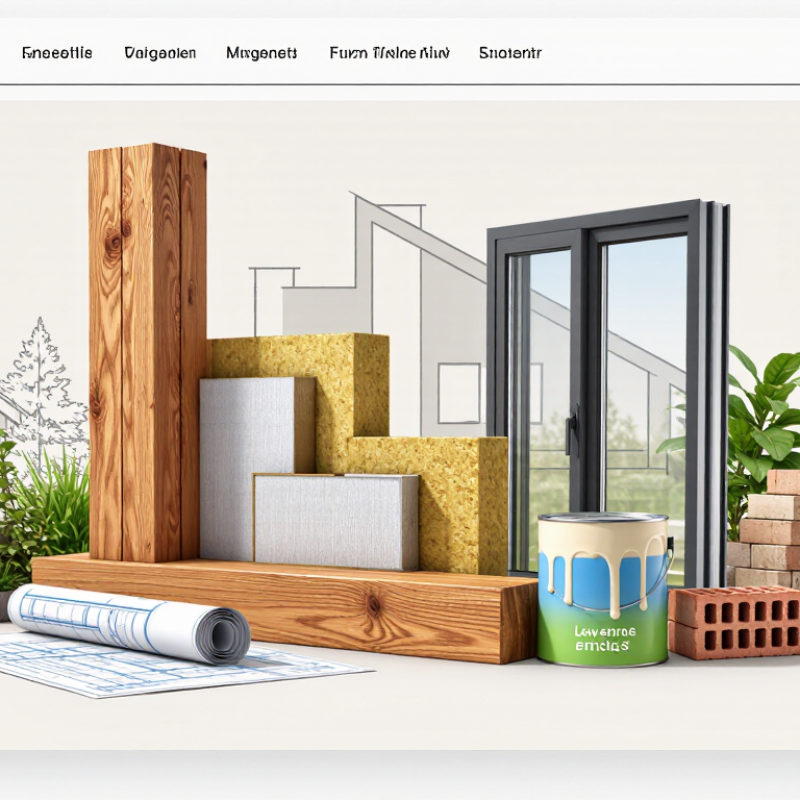
Definition and Core Principles of Eco Building Supplies
Eco building supplies are materials and components chosen to reduce a building’s environmental impact across extraction, manufacture, use, and disposal. Examples include reclaimed timber, recycled-content insulation, low-emission paints, and durable roofing.
The label alone proves little. That matters.
Core principles include using fewer virgin resources, limiting waste, and choosing products that last. A material’s full life cycle is important: a recycled product may still require energy-intensive processing or long-distance transport. Indoor air quality also counts. Finishes with clear emissions information can help reduce unwanted pollutants inside rooms. Look for product documentation, such as recycled-content details, sourcing information, and maintenance guidance. No option is perfect, and local availability can change the trade-offs.
Tips: Compare products by function, not just by eco claims. Check that insulation suits the climate and building design. Ask how a material performs over time, and consider repair needs. A little uncertainty is normal; record what you could verify and what remains unclear.
Key Environmental and Health Characteristics
Eco building supplies are chosen for more than recycled content or a natural appearance.
Their environmental profile includes where raw materials come from, how much energy manufacturing uses, how long products last, and whether they can be reused. The United Nations Environment Programme’s 2023 Global Status Report found that buildings and construction accounted for 37% of global energy- and process-related carbon dioxide emissions in 2022. That figure makes material choices important, but it does not mean every “green” product has a low footprint. Transport, processing, replacement frequency, and disposal all matter. Sometimes the answer is simply using less.
Health characteristics are just as tangible.
Low-emitting paints, adhesives, flooring, and composite wood can reduce exposure to volatile organic compounds (VOCs) indoors. The U.S. Environmental Protection Agency notes that VOC concentrations indoors can be two to five times higher than outdoors, and may rise further after certain activities. For formaldehyde, the World Health Organization’s indoor-air guidelines set a 30-minute limit of 0.1 mg/m³. Look for independent emissions testing and clear product documentation, not only labels such as “natural” or “eco.” Ventilation and careful installation matter, too. A material can test well and still create problems if installers use it poorly or combine it with high-emitting products. The evidence is useful, but no single label tells the whole story.
Major Categories of Eco Building Supplies
Eco building supplies include reclaimed materials, lower-carbon structural products, efficient insulation, and healthier finishes. Reclaimed timber, brick, and metal can reduce demand for newly extracted resources. Inspect them for moisture damage, corrosion, and inconsistent dimensions before specifying them. Reuse is not automatically the best choice if transport or extensive repairs outweigh the material savings.
Structural options include recycled-content steel, responsibly sourced wood, and concrete mixes designed to use less cement. Their environmental impact depends on sourcing, manufacturing, and service life, so compare verified product information rather than relying on broad labels. Insulation may be made from cellulose, mineral wool, or plant fibers. Check thermal performance and suitability for the building’s climate and wall assembly. Moisture still matters.
Finishes form another major category: low-emission paints, sealants, flooring, and panels can help limit indoor pollutants. Look for clear emissions data, and remember that one label does not describe every health or environmental impact. Efficient windows, lighting, and water-saving fixtures also count as eco supplies because they can reduce ongoing energy or water use. A well-sealed window helps, but installation quality matters just as much; a small gap around the frame can undermine its performance. When comparing products, weigh durability, repair needs, and end-of-life options alongside initial cost. Some sustainable choices are imperfect, and local availability can narrow the practical options.
What Are Eco Building Supplies? — Major Categories
Eco building supplies are materials and products selected to reduce environmental impact, conserve resources, or support healthier indoor spaces. The chart counts illustrative examples listed for each category—not market share or measured environmental performance.
Examples include reclaimed or responsibly sourced materials, recycled-content products, and resource-efficient building components. Their environmental benefits depend on sourcing, manufacturing, location, and use.
How Materials Are Sourced, Made, and Reused
What Are Eco Building Supplies?
How Materials Are Sourced, Made, and Reused
Eco building supplies are materials chosen with attention to their full life cycle. That story begins at the source: Is timber responsibly harvested, or reclaimed from an older structure? Are recycled-content products made nearby or shipped long distances? These details can change a material’s overall impact. Reclaimed wood may show nail holes and uneven color. That is part of its history, not necessarily a defect. For new materials, ask suppliers for ingredient disclosures or environmental product declarations when available. Such documents help compare products, but they do not make every choice simple.
Manufacturing matters, too. Energy, water, and chemical use can affect a product’s footprint and indoor air quality. A durable material may need fewer replacements, though durability depends on proper installation and care. No material is impact-free. I have seen “green” choices create extra waste when dimensions were not checked before ordering. At a building’s end of use, components that can be unfastened and sorted are easier to reuse or recycle. Reuse is not automatic; clean storage and a realistic local outlet matter.
Tips: Check where materials come from and how they are made. Ask for clear documentation, not just broad environmental claims. Measure carefully, save offcuts where practical, and choose finishes that can be repaired. A perfect answer may not exist, but better questions help.
How to Evaluate and Select Eco Building Supplies
What Are Eco Building Supplies?
How to Evaluate and Select Eco Building Supplies
Eco building supplies are materials chosen to reduce environmental impacts while meeting practical needs for safety, comfort, and durability. A “green” label alone is not enough. Check what the product is made from, how long it is expected to last, and whether it can be repaired or recycled. The UNEP and GlobalABC 2023 Global Status Report estimated that buildings and construction produced 37% of global energy- and process-related CO₂ emissions in 2022. Material choices matter.
Ask suppliers for Environmental Product Declarations (EPDs), which report impacts across defined life-cycle stages. Compare products with the same function and boundaries; otherwise, the figures can mislead. The World Green Building Council’s 2019 report, Bringing Embodied Carbon Upfront, attributed about 11% of global emissions to building materials and construction. Also check recycled or renewable content, indoor-air emissions, durability, and transport distance. Look for independent testing and clearly stated methods, not broad claims such as “natural” or “eco-friendly.”
Details matter. A low-impact floor that wears out quickly may need frequent replacement. A nearby material is not automatically the better choice if it performs poorly or requires extra maintenance. I’d compare the paperwork, then ask how the product handles a damp corner, a heavy doorway, or routine cleaning. Still, no single label settles the question. Supplier data can be incomplete, and real-world performance may differ from estimates.