Natural beauty for your favorite space

What Are Sustainable Building Materials for Homes?

A home’s environmental footprint begins long before its first heating bill. Sustainable Building Materials For Homes can reduce embodied carbon, limit waste, and support healthier indoor spaces. The choices are tangible: timber framing, recycled-content insulation, reclaimed flooring, and concrete mixes designed to use less clinker. Each option has trade-offs.

The United Nations Environment Programme’s 2023 Global Status Report for Buildings and Construction estimated that buildings and construction accounted for 37% of global energy- and process-related carbon dioxide emissions in 2022. That matters. It also means material decisions are only part of the picture; efficient design and careful construction count too. The U.S. Environmental Protection Agency estimated that construction and demolition activities generated 600 million tons of debris in 2018. That was more than twice the amount of municipal solid waste generated that year. But labels can mislead. A recycled or “natural” product is not automatically the best choice if it performs poorly, travels far, or needs early replacement.

This guide looks at how to compare materials using credible product data, durability, sourcing, and likely maintenance needs. It also considers practical details, such as whether insulation suits a home’s climate and whether wood carries responsible-sourcing documentation. No single material wins everywhere. Local availability, installation quality, and the building’s design can change the result, so some choices deserve a closer look.
What Are Sustainable Building Materials for Homes?

What Makes a Building Material Sustainable?

What makes a building material sustainable depends on its full life, not one attractive feature. Consider where its raw materials come from, how much energy manufacturing requires, transport distance, durability, repair needs, and what happens after demolition. A low-carbon material that needs frequent replacement may not be a sound choice. Nor is “local” automatically better; production impacts can outweigh shorter transport.

The 2023 Global Status Report for Buildings and Construction, published by UNEP and the Global Alliance for Buildings and Construction, estimates that buildings and construction accounted for 37% of global energy- and process-related CO2 emissions in 2022. That figure covers more than materials alone, but it shows why careful material choices matter. Whole-life carbon assessment helps compare options that perform the same job over a similar lifespan. Environmental Product Declarations can provide useful product data, though an EPD is not a sustainability label. Details matter. Data can also be incomplete, so comparisons deserve a little skepticism.

Tips: Ask suppliers for product-specific EPDs, recycled-content figures, and maintenance guidance. For a renovation, check whether sound timber, brick, or fixtures can be reused before buying new. Then compare expected lifespan and replacement needs, not just the purchase price. This takes time. It is rarely a perfect calculation.

Key Environmental and Performance Criteria

Choosing sustainable building materials means judging more than recycled content. Look at the full life cycle: extraction, manufacturing, transport, use, and end-of-life options. A nearby material may reduce transport emissions, but local availability alone does not prove low impact. Ask for environmental product declarations when available, and compare products with similar functions and service lives. Details matter. Durability is environmental performance, too. A floor that needs frequent replacement can erase some production savings. Check moisture resistance, repairability, maintenance needs, and suitability for the home’s climate. For insulation, compare thermal performance and installation quality; gaps around edges can undermine stated ratings.

Indoor emissions and comfort count. Look for clear information on volatile organic compounds, especially for paints, adhesives, and finishes. A low-emission label helps, but ventilation and correct installation still matter. Consider whether a material handles humidity without trapping moisture, and whether it can be safely repaired or reused. Sometimes trade-offs are awkward. A highly durable option may require more energy to make, while a recycled option may travel farther. Compare evidence, not slogans, and consider performance over the building’s expected life. Product data can be incomplete, so one score rarely tells the whole story.

Common Types of Sustainable Materials for Homes

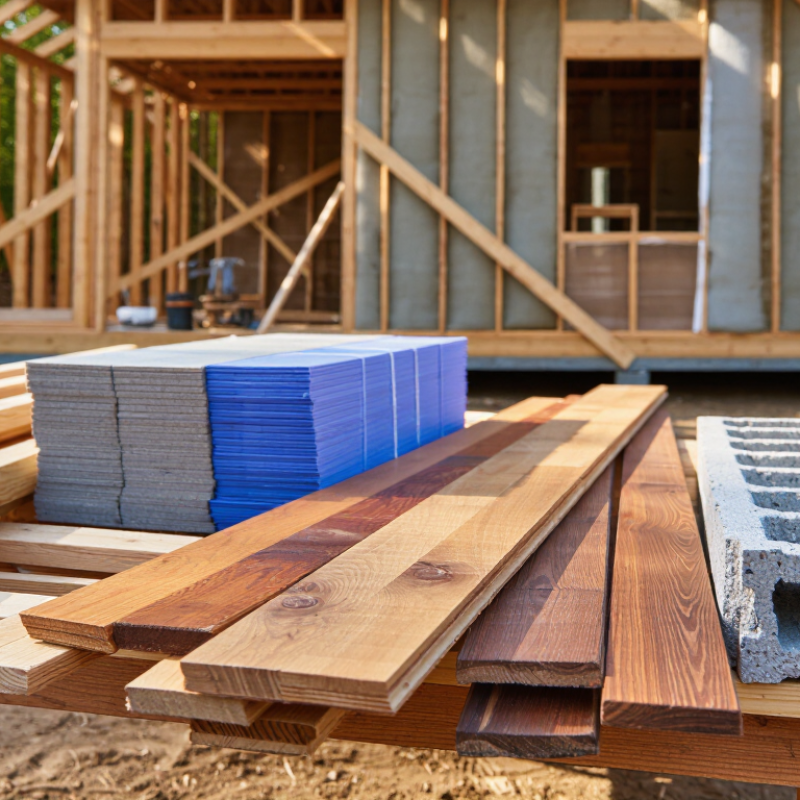
Common sustainable materials for homes include reclaimed wood, bamboo, cork, recycled steel, and cellulose insulation. Reclaimed timber can give floors or beams a second life, but check for rot, pests, and old coatings before installation. Bamboo grows quickly, though transport distance and manufacturing methods affect its overall impact. Cork feels warm underfoot and can help soften room noise. It needs careful sealing in wet areas.

Recycled steel is durable and useful for framing, yet its production and transport still consume energy. Lower-carbon concrete mixes can reduce emissions compared with conventional mixes, but their performance depends on the project and local supply. Cellulose insulation, often made from recycled paper, fits into wall cavities and can limit drafts when installed evenly. Small gaps matter. No material is sustainable in every home. Climate, maintenance, availability, and expected lifespan all change the choice. A material with a strong environmental profile may still be a poor fit if it needs frequent replacement. Checking product documentation and asking installers about moisture control can prevent costly surprises. I would not treat any label as a complete answer.

How Sustainable Materials Are Used in Home Construction

Sustainable materials do more than replace virgin products; they need to suit a home’s climate, budget, and expected lifespan.

During construction, reclaimed timber can serve as wall framing, roof members, or interior finish. Crews should inspect it for moisture, pests, and hidden metal before cutting or fastening it. That takes care. Recycled steel is often useful in beams and connectors, where strength and consistent dimensions matter.

Insulation choices affect both comfort and energy use. Cellulose made from recycled paper can fill wall cavities, but installers must keep it dry and fit it evenly around wiring and pipes.

A continuous air barrier helps limit drafts; small gaps around windows can undermine careful work elsewhere. I still think this detail is easy to underestimate.

For foundations and slabs, lower-carbon concrete mixes may reduce cement use, though availability and curing conditions vary. Ask the design team to check that a proposed mix meets structural requirements. Cork or responsibly sourced wood can finish floors, while recycled glass may suit counters or tile.

These materials are not automatically sustainable in every project: transport, durability, repairs, and waste all count. Some choices cost more upfront, and not every home can use them.

How to Choose Materials for a Home Project

Choosing materials starts with the house, not a sustainability label. A wall in a rainy coastal climate needs different protection than one in a dry inland home. Note where sunlight falls, how rooms are ventilated, and whether walls often feel damp. These details affect durability and comfort.

Compare materials by lifespan, maintenance, and where their ingredients come from. Reclaimed timber may reduce demand for new resources, but check for moisture damage, pests, or coatings that need careful removal. For insulation, ask for product data on thermal performance and indoor emissions. A supplier’s sustainability claim is useful, but it should not replace clear documentation.

Then test your choices against the project’s real constraints. A sample of flooring can reveal color changes in morning light; a small wall mock-up can show how a finish handles scuffs. Ask contractors how each option performs in your local conditions and what upkeep it needs. Include transport, installation, and repair costs in the budget. No material is perfect. I would reconsider a “green” option if it needs frequent replacement or arrives from far away without a clear reason. Sometimes the practical choice is less obvious.