
ROCKin'teriors
Eco-Friendly stone fabrication and installation
Natural beauty for your favorite space
What Are the Best Sustainable Building Materials?
Choosing the Best Sustainable Building Materials is not a simple shopping exercise. A material’s impact depends on where it comes from, how it is made, and how long it performs. Reclaimed timber, recycled steel, cellulose insulation, and lower-carbon concrete can all help, but none is automatically the right choice for every project. Climate, building design, and local supply matter.
Architect and sustainable-design expert William McDonough has said, “Being less bad is no good.” His challenge encourages designers to look beyond small improvements and consider how materials affect people and ecosystems throughout their life cycle. That means asking practical questions: Is the wood certified or reclaimed? How far must it travel? Can the insulation handle local moisture conditions? And what happens when the building is renovated decades later? Details matter.
This guide compares promising options through those real-world questions, including durability, embodied carbon, indoor air quality, and maintenance. A dense, durable floor may outlast a fashionable alternative; a locally available material may reduce transport impacts, though sourcing alone does not prove sustainability. Even familiar choices can disappoint. A product with recycled content may still require frequent replacement, and vague “eco-friendly” claims deserve careful checking. There is no universal winner. The most responsible choice is usually the one that fits the building, performs reliably, and can be traced to credible evidence. That standard takes more effort—but it is worth questioning easy answers.
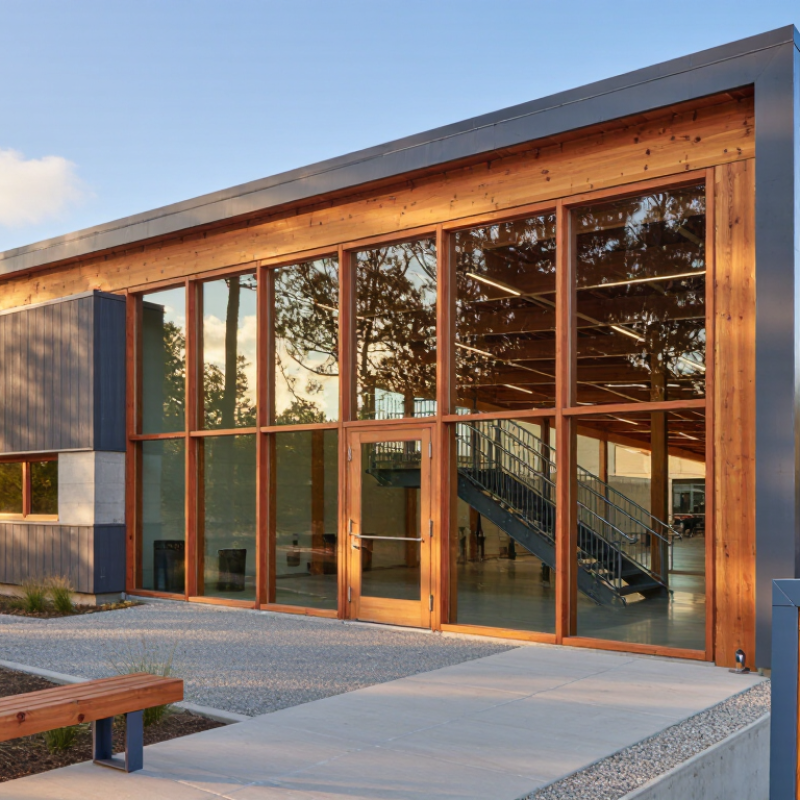
How Sustainable Building Materials Are Defined and Evaluated
A sustainable building material is not defined by one label. It is evaluated against its function, lifespan, and effects across its life cycle. A fair comparison starts with the same unit of service: for example, one square metre of wall meeting the same thermal and structural needs. Life-cycle assessment considers extraction, manufacturing, transport, installation, maintenance, and end-of-life treatment. Environmental Product Declarations, prepared under ISO 14025, disclose impacts in a standardized format, but they are not sustainability certificates. Boundaries and assumptions matter.
The scale is significant. The UN Environment Programme and Global Alliance for Buildings and Construction reported that buildings and construction accounted for 34% of global CO₂ emissions in 2023. The World Green Building Council’s 2019 report attributed about 11% of global emissions to building materials and construction. Project teams can compare these impacts alongside durability, repair needs, recycled content, and local availability. A material with lower factory emissions may require long-distance shipping or frequent replacement. Some impacts remain hard to compare. Even environmental declarations may use different data and assumptions, so a neat ranking can mislead. The assessment is useful, but never perfectly tidy.
What Are the Best Sustainable Building Materials? - How Sustainable Building Materials Are Defined and Evaluated
| Material | Common Uses | Environmental Strengths | What to Evaluate | Best-Fit Conditions |
|---|---|---|---|---|
| Reclaimed timber | Structural members, flooring, wall finishes, and interior features | Reuses existing wood and can reduce demand for newly harvested timber and disposal. | Check structural grade, moisture damage, contaminants, treatment history, and transport distance. Reuse benefits depend on processing and what the material replaces. | Projects with reliable local supply and a clear plan for inspecting and preparing recovered wood. |
| Responsibly sourced wood | Framing, roof structures, floors, and engineered wood products | Wood stores biogenic carbon while in use and is renewable when forests are managed and regenerated responsibly. | Review chain-of-custody documentation, forestry practices, product life-cycle information, durability, and end-of-life options. Carbon storage is not a substitute for assessing the full life cycle. | Projects where wood can meet structural and fire requirements and be protected from moisture and pests. |
| Cellulose insulation | Cavity walls, attics, and retrofit insulation | Usually made largely from recycled paper fiber; can reduce heating and cooling demand when correctly installed. | Compare recycled content, declared thermal performance, fire and pest treatments, installation quality, moisture control, and relevant environmental product declarations (EPDs). | Well-detailed assemblies where air sealing, ventilation, and moisture management are addressed. |
| Recycled steel | Beams, columns, reinforcement, and light-gauge framing | Steel is recyclable, and using recycled feedstock can reduce demand for virgin raw materials. | Steel production remains energy-intensive. Compare product-specific EPDs, recycled content, production route, transport, required quantity, corrosion protection, and realistic recovery at end of life. | Designs that use steel efficiently and can recover or recycle it after service. |
| Concrete with lower-carbon constituents | Foundations, slabs, walls, and other structural elements | Reducing clinker content with suitable supplementary cementitious materials can lower the cement-related emissions of a mix. | Compare verified mix-specific EPDs, cement content, material availability, strength development, curing needs, durability, and local code requirements. Performance varies by mix and supply region. | Projects where the mix can be specified early and validated for structural performance and exposure conditions. |
| Hemp-lime (hempcrete) | Non-load-bearing wall infill and insulation systems | Uses plant-based hemp shiv and can provide insulation and moisture buffering in appropriately designed assemblies. | Check binder type and quantity, local material supply, drying time, moisture detailing, fire testing, and verified life-cycle data. Hemp-lime is generally not a stand-alone load-bearing structural material. | Projects with suitable local expertise, construction time, and wall-system detailing. |
| Straw-bale wall systems | Insulated walls in engineered or approved building systems | Uses an agricultural by-product and can provide substantial insulation when installed as part of a well-designed wall assembly. | Assess straw source, moisture protection, detailing around openings, fire performance, pest control, local approvals, and construction quality. | Low-rise projects with a suitable climate strategy and experienced design and construction teams. |
| Recycled-content glass insulation | Roof, wall, floor, and service-space insulation | Many products incorporate recycled glass; insulation can reduce operational energy use when installed effectively. | Check the declared recycled content, thermal performance, binder and emissions information, product EPD, durability, and installation waste. | Projects needing widely available insulation with well-established installation methods. |
Evaluation note: No material is universally “best.” Compare products for the same function using whole-life assessment, including embodied impacts, operational performance, durability, health, responsible sourcing, transport, and end-of-life options. Prefer product-specific, independently verified EPDs where available.
Related Posts
-
What Are Eco Building Supplies?
-
China Top 10 Best Sustainable Building Materials Suppliers
-

Why Choose Innovative Sustainable Building Materials?
-
Exploring the Surge in Global Demand for Most Environmentally Friendly Building Materials at the 137th Canton Fair
-

Exploring the Top 10 Most Sustainable Building Materials: How They Reduce Carbon Footprint by 40% in 2023
-
Ultimate Checklist for Sourcing the Most Sustainable Building Materials Globally