ROCKin'teriors
Eco-Friendly stone fabrication and installation
Natural beauty for your favorite space
How to Choose Eco Friendly Building Materials?
Choosing Eco Friendly Building Materials is no longer a decorative preference. It is a practical decision about carbon, health, durability, and future waste.
The United Nations Environment Programme and Global Alliance for Buildings and Construction reported in the 2023 Global Status Report that buildings produced approximately 37% of global energy-related and process-related carbon dioxide emissions in 2022. This figure includes operational energy and construction-related activities. Materials matter. Cement, steel, insulation, timber, glass, and finishes can carry significant embodied emissions before a building opens.
The right choice requires more than a “green” label. Designers should review Environmental Product Declarations, recycled content, local availability, toxicity data, service life, and end-of-life options. A recycled material shipped across continents may not outperform a durable regional alternative. That uncomfortable detail is easy to overlook. It deserves honest assessment.
William McDonough, architect and co-author of Cradle to Cradle, wrote, “Design is the first signal of human intention.” His principle supports a circular approach to material selection. Products should ideally remain useful, repairable, and recoverable rather than becoming landfill waste. However, no material is perfect. Bamboo can raise sourcing concerns, while recycled products may have inconsistent performance. Responsible decisions depend on verified evidence, project conditions, and whole-life carbon assessment.
This guide examines how to compare Eco Friendly Building Materials with greater confidence. It considers environmental impact, technical performance, cost, certifications, and practical installation details. Expect trade-offs. Good sustainability is rarely simple.
Defining Eco-Friendly Building Materials and Their Environmental Benefits
How to Choose Eco Friendly Building Materials?
Eco-friendly building materials create less environmental harm across their full life cycle. This includes extraction, manufacturing, transportation, installation, use, and disposal. A material is not truly sustainable simply because it contains recycled content. Its production may still consume high energy or release significant emissions.
In practice, I examine durability, repairability, and local availability before accepting environmental claims. A reclaimed timber floor can reduce landfill waste and preserve stored carbon. However, it may require careful testing for moisture, pests, or old chemical treatments. Recycled metal often performs well because it can be reused repeatedly without losing essential strength. Low-emission insulation can also improve indoor air quality, especially in tightly sealed rooms. Small details matter. A poorly fitted material can waste energy for decades.
Reliable decisions need evidence, not attractive labels. Life-cycle assessments show impacts beyond the construction site. Environmental product declarations provide measured data about energy use, emissions, and resource consumption. Independent certifications may help, but their standards should be checked carefully. Regional climate also changes the answer. A breathable wall system may suit a humid building differently than a dry one. I have found that the “greenest” option is sometimes the material already in place, if it can be safely repaired. That idea feels less exciting, yet replacement creates transport, waste, and new manufacturing impacts. Some data remains incomplete, so responsible selection includes admitting uncertainty and comparing realistic alternatives.
How to Choose Eco Friendly Building Materials? - Defining Eco-Friendly Building Materials and Their Environmental Benefits
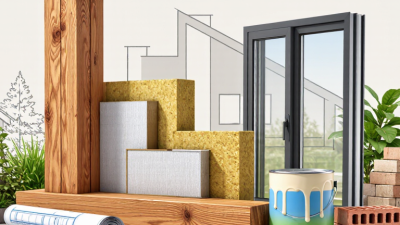
| Material Category | Typical Environmental Profile | Indicative Embodied Carbon | Renewable or Recycled Content | Key Environmental Benefits | Important Selection Considerations |
|---|---|---|---|---|---|
| Recycled Steel | Manufactured using recovered steel scrap and electric or other high-efficiency production routes. | Approximately 0.4–1.0 kg CO₂e per kg of steel, depending on production route and electricity mix. | Often contains a high proportion of recycled scrap; the actual percentage should be verified in the product declaration. | Reduces demand for virgin ore, can be repeatedly recycled, and provides high structural strength with relatively low material volume. | Check recycled content, electricity source, corrosion protection, transport distance, and end-of-life recovery options. |
| Engineered Timber | Structural wood products manufactured from renewable timber resources and bonded or mechanically assembled components. | Fossil-fuel-related impacts are commonly low, but results vary substantially with forestry, adhesives, processing, and accounting methods. | Primarily renewable biomass; responsible sourcing and verified forest management are important. | Can store biogenic carbon during the service life, requires less energy to manufacture than many mineral materials, and is relatively lightweight. | Assess forest-management practices, moisture protection, fire design, adhesive composition, service life, and reuse or recycling pathways. |
| Low-Carbon Concrete | Concrete that reduces the proportion of clinker through supplementary cementitious materials or optimized mix design. | Approximately 150–350 kg CO₂e per m³ for many lower-carbon mixes; conventional mixes may be higher. | May include recycled aggregate or industrial mineral additions; the percentage varies by specification and local availability. | Reduces clinker-related emissions, can use industrial by-products, offers long structural life, and provides thermal mass. | Confirm structural performance, curing requirements, local material availability, durability exposure class, and verified life-cycle data. |
| Cellulose Insulation | Loose-fill or dense-pack insulation made mainly from processed recycled paper fiber. | Usually low embodied carbon compared with many fossil-fuel-based insulation products; exact results depend on additives and manufacturing energy. | Commonly contains a high proportion of post-consumer recycled paper fiber. | Diverts paper from disposal, provides effective thermal and acoustic insulation, and can reduce operational heating and cooling demand. | Evaluate moisture management, settlement, fire treatment, installation quality, and local availability. |
| Wood-Fiber Insulation | Rigid or flexible insulation made from wood fibers, often using residual wood from managed forestry operations. | Generally low to moderate embodied carbon, with results affected by binder type, energy use, transport, and biogenic-carbon accounting. | Renewable wood fiber content is typically high; sourcing should be documented. | Offers thermal insulation, useful heat-capacity benefits, renewable feedstock, and potential carbon storage during use. | Check fire resistance, water exposure, vapor control, density, dimensional stability, and end-of-life options. |
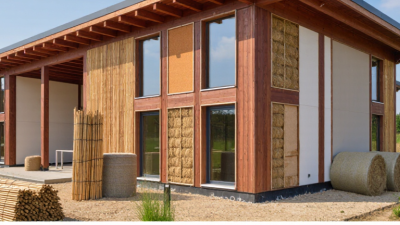
| Straw Bale or Straw-Panel Systems | Building components made from compressed agricultural straw, usually protected within a carefully designed wall assembly. | Often very low before transport and finishing materials; project-specific life-cycle assessment is recommended. | Primarily a rapidly renewable agricultural by-product. | Uses agricultural residue, provides high insulation value, and can store biogenic carbon while reducing reliance on synthetic insulation. | Requires strict moisture detailing, suitable fire design, pest protection, adequate wall thickness, and locally accepted construction methods. |
| Rammed Earth or Compressed Earth Blocks | Wall materials made primarily from local mineral soil, sometimes stabilized with a small amount of cement or lime. | Can be very low when locally sourced and minimally stabilized; stabilization and transport can significantly increase impacts. | Usually contains abundant local mineral material rather than recycled or renewable content. | Low transport impact when locally sourced, minimal processing, high thermal mass, and potential for reuse or return to soil where uncontaminated. | Verify structural capacity, erosion resistance, rainfall protection, soil suitability, labor requirements, and local building codes. |
| Recycled Glass Aggregate | Crushed post-consumer glass used in concrete, drainage layers, landscaping, or other mineral applications. | Usually lower than producing equivalent virgin glass aggregate, although collection, cleaning, crushing, and transport affect results. | May consist largely of recovered glass from municipal or construction waste streams. | Diverts glass from disposal, reduces extraction of virgin aggregate, and can provide durable mineral performance. | Check particle grading, contamination, alkali–silica reaction risk in concrete, and regional supply reliability. |
| Reclaimed Brick | Previously used masonry units cleaned and installed again in new construction or renovation projects. | Usually substantially lower than new brick because firing is avoided; cleaning, testing, and transport still contribute impacts. | High reuse content by definition, with no new firing required for the recovered units. | Extends product life, reduces demand for new clay extraction and kiln energy, and limits construction waste. | Inspect dimensions, frost resistance, strength, mortar compatibility, contamination, and labor needed for cleaning. |
| Low-Emission Finishes | Paints, sealants, adhesives, and coatings formulated to reduce volatile organic compound emissions. | Embodied carbon is generally smaller than that of structural materials, but impacts depend on formulation, packaging, coverage, and replacement frequency. | May contain recycled or bio-based ingredients, but these should be confirmed through product documentation. | Can improve indoor air quality, reduce hazardous emissions, and support healthier occupied spaces. | Review independent emissions testing, durability, maintenance needs, curing requirements, and disposal instructions. |
Note: Embodied-carbon values are indicative ranges rather than universal product ratings. Actual results depend on raw materials, manufacturing technology, electricity mix, transport distance, construction process, service life, and end-of-life treatment. For project decisions, compare independently verified life-cycle assessments or environmental product declarations using the same system boundaries.