Why Choose Aluminum Profiles for Solar Panel Frames?
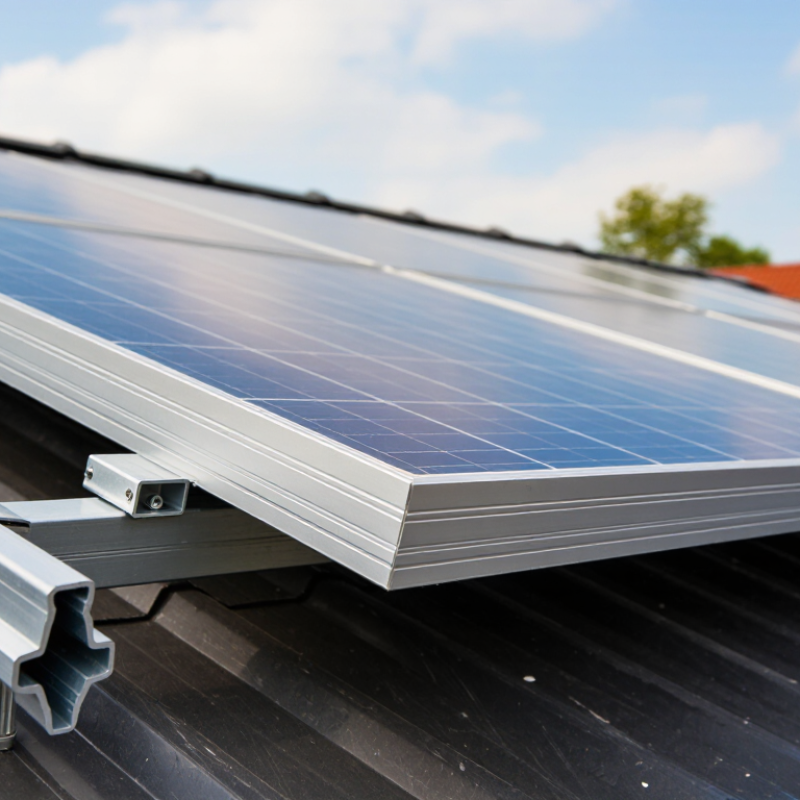
Solar panels work outdoors through heat, rain, wind, and repeated temperature changes. Their frames must hold the module securely without adding unnecessary weight. An Aluminum Profile For Solar Panel Frame is often selected because extruded aluminum can combine low mass with useful structural strength. It can also be cut and shaped to suit different panel dimensions and mounting systems. Small details matter.
In practical design, the profile’s cross-section affects stiffness, fit, and how loads travel to the mounting points. Installers need frame edges that align cleanly, accessible fixing points, and surfaces that do not interfere with clamps. Aluminum’s natural oxide layer helps resist corrosion, but performance still depends on the alloy, finish, environment, and maintenance. Coastal air or trapped moisture can change the equation. No material is maintenance-free.
Choosing a frame therefore means looking beyond the metal itself. Engineers should check profile dimensions, wall thickness, connection details, drainage, and compatibility with the panel manufacturer’s requirements. A lighter frame may simplify handling on a roof, yet an undersized section can flex under load. That trade-off deserves careful review. In this article, we’ll explore why aluminum profiles are widely used for solar panel frames, what benefits they can offer, and which design considerations deserve attention before selection. The right choice depends on the project, not just a product label.
Key Properties of Aluminum Profiles Used in Solar Panel Frames
Why Choose Aluminum Profiles for Solar Panel Frames?
Key Properties of Aluminum Profiles Used in Solar Panel Frames
Solar frames need to stay light while holding glass and modules against wind and handling loads. Aluminum offers a useful balance. Light, but not flimsy. The Aluminum Association’s Aluminum Standards and Data lists aluminum’s density at about 2.70 g/cm³; 6063-T5 extrusion data give a typical elastic modulus near 69 GPa. The alloy and temper matter: strength varies, so designers should check certified values rather than assume every profile performs alike.
Corrosion resistance supports long outdoor service, while anodized finishes can add protection at exposed surfaces. Aluminum also conducts heat, and its thermal expansion is about 23 μm per meter per °C. That movement is easy to overlook. Across a long rail, temperature changes can shift joints and clamp positions, so slots and fasteners need suitable tolerances. Profile geometry matters too: deeper sections can improve stiffness without adding much material, but thin walls may dent during transport or installation.
End-of-life recovery is another practical property. The IRENA and IEA-PVPS report End-of-Life Management: Solar Photovoltaic Panels estimates 1.7–8 million tonnes of cumulative PV waste by 2030, depending on the scenario. Aluminum frames are separable metal components, though actual recovery depends on dismantling and local recycling capacity. Inspect cut edges, drainage paths, and dissimilar-metal contacts; small design details can become corrosion points after years outdoors.
Structural Strength and Weight Advantages in Solar Installations
Solar panel frames must keep glass modules steady through wind, handling, and seasonal movement. Aluminum profiles provide useful stiffness without adding much weight to roofs or support structures. Extruded sections can place material where loads matter, such as along long edges and around corner joints. A worker can lift and position an aluminum frame more easily than a comparable heavy steel assembly. That matters on sloped roofs, where awkward handling can slow installation and increase strain. Still, light does not mean weak. Profile depth, wall thickness, alloy, and connection design all affect performance.
On a ground-mounted array, lighter frames can reduce demands on rails and foundations, though wind and span calculations remain essential. A thin profile may flex too much between supports, even when its alloy has good strength. Check module dimensions, clamp locations, expected loads, and site conditions before specifying a section. Corrosion resistance is another practical benefit, especially where rain or humid air reaches exposed edges. But cut ends and contact with other metals deserve attention; careless detailing can create weak points. Aluminum is not automatically the best answer. Thermal movement or material cost may change the choice. Measure twice. A frame should feel manageable in the hands, yet remain rigid after fastening.
Why Choose Aluminum Profiles for Solar Panel Frames?
Comparing material density and minimum yield strength for representative aluminum and steel grades
Aluminum 6063-T5 has a density of about 2,700 kg/m³, compared with about 7,850 kg/m³ for ASTM A36 steel. For the same material volume, aluminum is approximately 66% lighter. Steel has a higher minimum yield strength in this comparison, so frame strength depends on alloy, profile geometry, connections, and installation loads—not material weight alone.
Corrosion Resistance and Performance in Outdoor Conditions
Solar panel frames face rain, condensation, dust, and sharp temperature swings. Aluminum performs well because a thin oxide film forms naturally on its surface, slowing further corrosion. This protection helps on rooftops where water can linger after a storm. Not a guarantee. Coastal air carries salt, while trapped grime can keep a frame damp for hours. Alloy choice and surface finish matter in these conditions. Anodizing or a suitable coating can add protection, but scratches and cut edges may still need attention.
Frame design also affects outdoor durability. Drainage paths should let water escape instead of pooling around joints. Where aluminum contacts stainless steel, moisture can increase galvanic corrosion risk; suitable isolation washers can help reduce direct contact. Small details matter. During inspections, look for worn coatings, blocked drainage, and loose fasteners, especially after severe weather. Aluminum is light and generally corrosion resistant, but it still needs sensible detailing and occasional care. I would not assume every site behaves the same: shaded roof sections, salty air, and poor drainage can change how quickly wear appears.
Profile Design, Fabrication, and Compatibility with Solar Modules
A solar frame is a precision interface, not just a border. IEA PVPS’s Snapshot of Global PV Markets 2024 estimates that cumulative photovoltaic capacity exceeded 1.6 terawatts in 2023. At that scale, consistent profile geometry matters. A channel section can keep the module edge supported while limiting excess material. Wall thickness, corner joints, and drainage paths should suit the expected wind loads and installation environment.
Fit matters. Fraunhofer ISE’s Photovoltaics Report describes crystalline silicon as the dominant module technology, representing more than 95 percent of production. Yet module dimensions and clamping zones still vary. Confirm the module maker’s mounting instructions before fixing profile length, slot position, or clamp spacing. A few millimeters can shift pressure onto a vulnerable edge. Do not assume one profile fits every module.
Fabrication quality affects that fit. Specify cut-length and squareness tolerances, remove burrs, and check corner alignment after assembly. Surface treatment can help resist weathering, but coating thickness should be included in clearance checks. Allow for thermal movement along long rails, too. A tidy drawing may miss field conditions: installers encounter uneven supports, debris, and hurried adjustments. Test a sample frame with the intended module before committing to production.