
Natural beauty for your favorite space
Top Trade Show Booth Rental Alternatives for Global Buyers
Global exhibitions are returning to growth, but booth decisions remain complex. UFI’s 2024 Global Exhibition Barometer projected a 15% increase in exhibition-industry revenue for 2024. That forecast signals renewed activity, not identical conditions in every market. For global buyers, venue rules, shipping distances, labor costs, and local supplier capacity can change the real cost of exhibiting. A polished stand in a render may look simple; crates, lighting, and installation schedules tell a less tidy story.
A Trade Show Booth Rental Alternative can mean purchasing a reusable modular system, hiring a local fabricator, or combining owned graphics with rented structures. Each route shifts costs, control, and operational work differently. Freeman’s 2024 Trends Report also emphasizes that attendees value useful, engaging in-person experiences, making clear product demonstrations and easy conversations important design goals. Yet no single format guarantees better results. Not always. A reusable booth may reduce repeat rental costs, but storage and international freight can erase some savings. Local fabrication can simplify transport, though quality and coordination need careful checking. This guide compares practical options for global buyers, including where each approach fits, what to verify in supplier quotes, and which trade-offs deserve a second look before committing. A spreadsheet helps. So does asking who will handle repairs when a panel arrives scratched.
Understanding Trade Show Booth Rental Needs Across Markets
Booth rental needs vary with shipping distance, venue rules, and local labor availability. A 20-square-meter island stand may need lightweight panels in one market, but stronger overhead rigging in another. UFI’s 30th Global Exhibition Barometer, published in January 2023, projected global exhibition revenues to recover to 97% of 2019 levels in 2023. That forecast signals renewed activity, not uniform demand. A global estimate cannot replace checking the show’s floor plan, contractor deadlines, or local service costs.
Across markets, buyers should compare rental packages by what they actually include: flooring, lighting, storage, installation, and dismantling. Small details matter. In freight-sensitive locations, reusable modular displays can reduce repeated shipping, while local rentals may simplify delivery and storage. Where labor costs are high, confirm whether setup hours and electrical work are included; vague quotes can become expensive. Ask for material specifications and a marked-up layout before approval. Rental is not automatically the flexible choice. A hybrid approach may fit better, though it can add coordination work. That trade-off deserves a second look.
Modular Booth Systems for Flexible Exhibiting
Modular booth systems offer global exhibitors a flexible alternative to renting a complete, fixed-layout stand. Reusable frames, interchangeable panels, and adjustable counters can support different booth sizes across multiple events. For example, a team might use a compact corner display in one venue, then add shelving and a meeting table for a larger show. Small changes matter.
Before choosing a system, confirm the venue’s dimensions, access points, and installation schedule. Ask for a parts list, packing dimensions, and clear assembly instructions. These details help teams compare shipping and labor needs across destinations. A simple test assembly before travel can reveal loose connectors or missing tools. It is not glamorous, but it saves time.
Modular systems are not a perfect fit for every exhibitor. A layout can feel repetitive, and unusual shapes may require custom components. Still, replaceable graphics and reusable structures can reduce the need to rebuild from scratch. Check how damaged parts are handled, and confirm which services are included in the rental. Plans sometimes change; allow room in the design for a smaller footprint or a late update.
Custom-Built Booths for Distinctive Brand Experiences
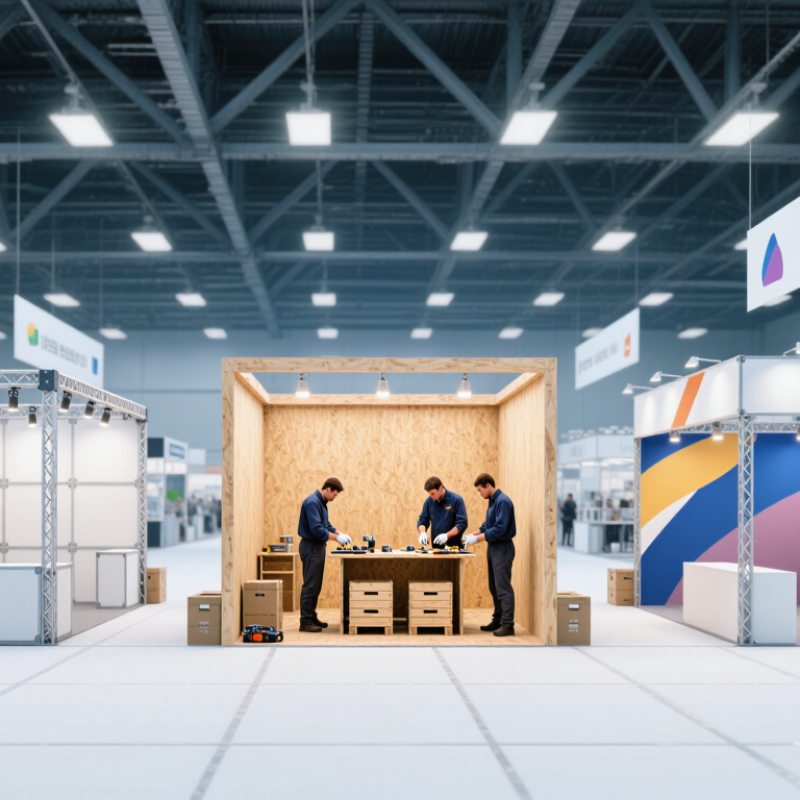
For global buyers comparing trade show booth rental alternatives, a custom-built booth offers control over every visitor touchpoint. Shape the space around a live product demonstration, a quiet meeting nook, and clear sightlines from the aisle. Warm lighting, textured panels, and a carefully placed screen can make the experience feel intentional. Small details matter. Yet custom construction is not automatically better; shipping, storage, and installation can outweigh its visual impact.
UFI’s Global Exhibition Barometer reported that surveyed organizers expected 2024 revenues to average 15% above 2019 levels. That signals renewed activity, but not guaranteed value for every exhibitor. A distinctive booth should make the brand easier to understand, not simply larger. Set one measurable goal, such as qualified conversations, and design the layout to support it. A striking feature without a visitor purpose may become an expensive backdrop.
Tips: Ask builders for scaled floor plans, material samples, and itemized estimates before production. Specify reusable components, local sourcing options, and a realistic setup schedule. Test the visitor path with staff before opening day. A custom booth can still feel crowded; revise the plan when the model says so. UFI’s report offers useful market context, while project-level costs and audience response should guide the final choice.
Top Trade Show Booth Rental Alternatives for Global Buyers - Custom-Built Booths for Distinctive Brand Experiences
| Booth Solution | Typical Structure | Best Suited For | Design Flexibility | Reuse Potential | Logistics Considerations | Relative Cost Profile |
|---|---|---|---|---|---|---|
| Custom-Built Booth | Purpose-designed construction using materials such as timber, metal, printed graphics, lighting, and fitted display elements. | Exhibitors seeking a distinctive environment, tailored visitor flow, or product-specific displays. | High; dimensions, finishes, storage, lighting, and visitor areas can be planned around the exhibit goals. | Components may be stored and reused, although some elements can be specific to a stand size or event. | Requires advance design approval, production planning, shipping coordination, and installation labor. | Usually higher initial investment; costs depend on size, materials, fabrication, transport, and installation. |
| Modular Rental Booth | Reconfigurable frames or panels combined with rental counters, shelves, lighting, and graphic panels. | Organizations exhibiting at multiple events or needing a practical balance of customization and flexibility. | Moderate to high; layouts and graphics can often be adapted within the available system. | Rental hardware is returned after the event; graphics may be reusable if they fit future layouts. | Confirm available components, graphic specifications, installation services, and event-site access. | Generally lower upfront commitment than a fully custom build; pricing varies with configuration and services. |
| Portable Display System | Lightweight pop-up frames, fabric displays, banner stands, or compact tabletop exhibits. | Small exhibit spaces, regional events, product demonstrations, and teams traveling with limited freight. | Low to moderate; printed graphics and accessories can be changed, but the structure is usually standardized. | High; many systems are designed for repeated use and can be packed into carry cases or shipping cases. | Check packed dimensions, airline baggage rules, replacement graphic availability, and venue display requirements. | Often a lower-cost option, particularly when the display is reused and the exhibitor handles setup. |
| Turnkey Exhibit Rental | A rental package that may include the booth structure, graphics, furnishings, transport, installation, and dismantling. | International exhibitors who want to limit local purchasing, storage, and on-site coordination. | Moderate; design choices depend on the rental provider’s inventory and the event’s technical rules. | Rental components are typically returned; project-specific graphics may be retained or replaced. | Clarify delivery dates, local labor coverage, storage, electrical services, and responsibilities for damage or delays. | Bundled pricing can simplify budgeting; the final cost depends on the package, location, schedule, and services. |
| Hybrid Rental and Owned Display | Owned graphics, product fixtures, or branded elements combined with rented framing, furniture, and site services. | Exhibitors with reusable brand assets who need different booth sizes or local infrastructure at each event. | Moderate to high; reusable assets can be paired with layouts suited to each venue. | High for owned components; rented structures are returned after the show. | Coordinate graphic dimensions, storage, shipment of owned items, and compatibility with local rental systems. | Can reduce repeated purchases, though shipping, storage, and adaptation costs should be included in comparisons. |
Cost and service levels vary by booth size, event location, venue rules, schedule, materials, shipping, and installation requirements. Confirm specifications and inclusions with the event organizer and service providers before booking.
Portable Displays for Lightweight, Repeatable Use
For global buyers, portable displays offer a practical alternative when one booth must travel between cities. Lightweight frames can reduce freight weight and make carrying cases easier to handle. A compact kit may fit in a standard vehicle, depending on its packed dimensions. That helps when venue access is limited or delivery windows are short. Check the weight of the complete kit, not just the frame.
Look for tool-free connectors, numbered parts, and graphics that roll or fold without creasing. With a repeatable design, two people should be able to assemble the frame, attach the fabric, and level the feet without special tools. Test the setup before shipping. A short trial can reveal loose fittings or unclear labels. Durable joints, replaceable graphic panels, and a protective packing layout help displays withstand repeated use. Small parts can still go missing.
Before choosing a rental or portable display, confirm its dimensions, packed weight, cleaning requirements, and parts support between events. Request an itemized inventory and inspect a sample under ordinary venue lighting; printed colors may look different on screen. Lightweight structures can flex more than heavier ones, especially beneath large fabric panels. It is not perfect. Practice helps, but teams may still need to level the display on uneven floors.
Comparing Alternatives by Cost, Logistics, and Reuse
Global buyers should compare booth alternatives by total landed cost, not rental price alone. A rental package can avoid storage and refurbishment, but crates, handling, and installation may raise the final invoice. Ask for itemized freight, labor, and cleaning fees before approving the design. A modular purchase costs more upfront. It can make sense when the same frame travels to several shows, provided local teams can repair it.
UFI’s 2024 Global Exhibition Barometer projected industry turnover at 115% of 2019 levels. That signals strong activity, but not necessarily larger attendance; nominal revenue can rise with prices. Freeman’s 2023 Trust Report found that 77% of attendees trusted brands more after face-to-face interaction. For buyers, a crisp demo counter and reachable product samples may matter more than an elaborate structure. Reuse can reduce repeat material orders, though shipping a heavy kit across continents may erase some savings. Not always. Compare a local rental, a reusable lightweight frame, and a custom build against the same floor plan and show schedule. Include storage, customs handling, replacement parts, and setup hours. Small costs add up. One weak assumption remains: quoted freight estimates can shift before dispatch, so leave room in the budget.
