
Natural beauty for your favorite space
Top 10 Nail Free Glue Manufacturers for Global Buyers
Choosing a dependable Nail-Free Glue manufacturer is about more than comparing prices. Buyers need products suited to their materials, surfaces, and working conditions. A formula that grips a light trim piece may not perform the same way on a heavy panel or a damp wall. Small details matter: open time, curing speed, application temperature, cartridge design, and the clarity of the technical data sheet. Often, those details are where supplier differences become visible.
This guide introduces ten manufacturers for global buyers to evaluate. It considers product range, manufacturing experience, quality controls, customization, packaging, and communication. Reliable suppliers should be able to explain recommended applications and limitations, and provide relevant product documentation for review. Ask how performance is tested, how batches are tracked, and what support is available after delivery. A polished website is useful, but it is not proof of consistent production. That sounds obvious. It is easy to forget.
No ranking can replace a sample test under real project conditions. Surface preparation, adhesive thickness, and curing time can all affect results. Some information may also vary by region or product grade, so confirm current specifications directly with each manufacturer. The comparison ahead is a practical starting point, not a guarantee. It may miss a capable supplier. Careful verification still matters.
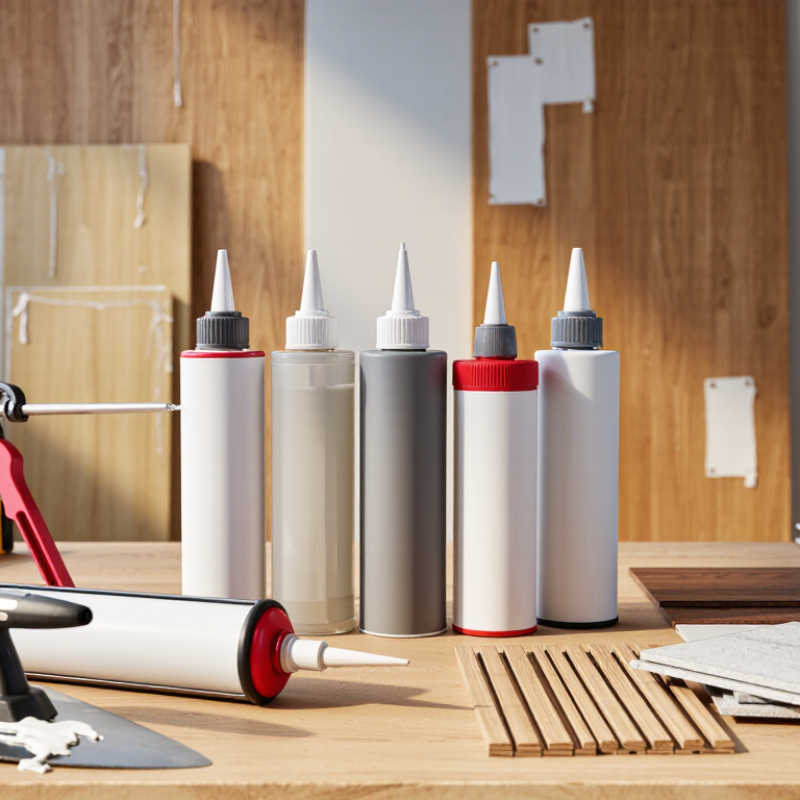
Understanding Nail-Free Glue and Its Main Applications
Nail-free glue is a construction adhesive designed to join materials without screws or nails. It can help attach skirting boards, decorative trim, wall panels, cable clips, and lightweight hooks. The bond forms as the adhesive cures, so the parts usually need steady contact during that period. “Nail-free” does not mean instant or universal. That matters.
Its performance depends on both surfaces. Painted plaster, timber, tile, and masonry may require different preparation, and dusty or damp surfaces can weaken adhesion. Clean away loose particles, check the product’s surface guidance, and apply a controlled bead rather than spreading it too thinly. Press the pieces together firmly. Temporary support may be needed while the adhesive sets.
These products are useful for small interior fitting jobs where drilling would leave visible holes or risk damaging a finished surface. They are not automatically suitable for heavy shelves, overhead objects, or places exposed to constant moisture. Check the stated load limits and curing time before removing supports. I would also test an inconspicuous spot first; paint can lift, and some finishes react unpredictably. That step is easy to skip. Sometimes regrettably.
How to Evaluate Nail-Free Glue Manufacturers for Global Buyers
Global buyers should assess nail-free glue manufacturers through test evidence, not catalogue claims. Compare adhesion on the exact materials you use, such as painted plaster, ceramic tile, or timber. Ask for technical data sheets, safety data sheets, batch traceability, shelf-life details, and documented quality controls. Grand View Research estimated the global construction adhesives market at USD 11.45 billion in 2023, with projected growth of 5.4% annually from 2024 to 2030. This broad market figure signals demand, but it does not verify any supplier’s product performance. Numbers need context.
Request test results that state temperature, humidity, curing time, and load direction. A joint holding well on a dry indoor wall may behave differently in a damp warehouse. Check whether production samples match the specification and whether the manufacturer can provide consistent packaging, export documents, and realistic lead times. Independent testing helps. Still, a neat report cannot replace a trial on your own substrates.
Tips: Send shortlisted suppliers the same test brief and compare results side by side. Ask for a small sample batch before placing a large order. Check that performance claims are supported by repeatable test conditions, not one successful demonstration. I would also ask what the product does not suit; suppliers may not always volunteer that detail.
Top 10 Nail Free Glue Manufacturers for Global Buyers - How to Evaluate Nail-Free Glue Manufacturers for Global Buyers
Buyer evaluation checklist: The table ranks ten selection criteria, not named manufacturers. Suggested weights are a customizable procurement framework; verify all product and supplier claims with current documentation and independent testing.
| No. | Evaluation Dimension | Suggested Weight | What Global Buyers Should Verify | Useful Evidence or Test Method |
|---|---|---|---|---|
| 1 | Application and Substrate Fit | 15% | Confirm the adhesive is intended for the actual substrates and service conditions, such as wood, concrete, masonry, metal, or selected plastics. Check whether priming, surface preparation, or a specific application method is required. | Technical data sheet (TDS), substrate compatibility list, written application instructions, and representative samples tested on the buyer’s materials. |
| 2 | Bond Strength and Test Relevance | 15% | Compare results only when substrate, preparation, cure conditions, specimen geometry, and test method are comparable. Ask whether reported values are typical, minimum, or guaranteed values. | Independent or traceable test reports. ASTM D1002 and ISO 4587 cover tensile lap-shear testing of bonded assemblies; ASTM D905 covers compressive shear testing of wood adhesive bonds. Select methods appropriate to the application. |
| 3 | Regulatory and Chemical Documentation | 15% | Check requirements for every destination market and intended use. Confirm that product classification, labeling, and chemical disclosures match the supplied formulation and packaging. | Current Safety Data Sheet (SDS), applicable GHS labeling information, and relevant market documentation. REACH, CLP, and TSCA obligations differ by product, role in the supply chain, and jurisdiction. |
| 4 | Cure Time and Installation Window | 10% | Review open time, fixture time, full-cure time, and temperature or humidity limits. Distinguish handling strength from full cure; site conditions can affect both. | TDS values with stated test conditions, plus trials under representative job-site temperatures, humidity, bead sizes, and assembly methods. |
| 5 | Durability and Environmental Resistance | 10% | Assess suitability for expected moisture, heat, cold, UV exposure, vibration, and aging. Do not assume a general-purpose product is suitable for continuous immersion, structural use, or exterior exposure. | Conditioned performance data and application-specific aging tests. Request test conditions and acceptance criteria rather than relying on broad claims such as “weatherproof.” |
| 6 | Quality Management and Batch Consistency | 10% | Evaluate incoming-material controls, batch traceability, release testing, change control, complaint handling, and corrective-action processes. | Quality-system audit or relevant ISO 9001 certificate verification, batch certificates or test summaries, lot traceability records, and documented change-notification procedures. |
| 7 | VOC, Odor, and Workplace Handling | 10% | Check VOC requirements, ventilation needs, odor expectations, and worker-protection measures for the destination market and installation setting. There is no single VOC limit that applies to every adhesive and jurisdiction. | Product-specific VOC test or declaration, SDS, and the applicable local standard or regulation identified by the buyer. |
| 8 | Packaging, Shelf Life, and Transport | 5% | Confirm package size and dispensing format, storage conditions, remaining shelf life at delivery, seal integrity, and any transport restrictions that apply to the formulation. | Packaging specifications, dated shelf-life data, storage instructions, and shipment documentation appropriate to the product classification and route. |
| 9 | Export Readiness and Supply Reliability | 5% | Assess production capacity, lead-time consistency, export documentation capability, destination-market language support, and contingency planning for supply interruptions. | Documented lead times, order history or references where available, export-document checklist, and written capacity or continuity commitments. |
| 10 | Customization and Technical Support | 5% | Determine whether the supplier can support required packaging, labeling, language, or formulation adjustments, and clarify minimum order quantities, development timelines, and ownership of custom specifications. | Written customization scope, approved sample process, change-control terms, technical response process, and agreed product specifications. |
Suggested use: Score each shortlisted supplier against the same criteria and documentation requirements. Treat standards and regulations as references to verify for the specific product, end use, and destination market.
Profiles of 10 Leading Nail-Free Glue Manufacturers
Profiles of leading nail-free glue manufacturers should reveal more than catalog breadth. Buyers need to compare substrate testing, curing behavior, production consistency, and technical support. A tube should bond a timber trim piece to a painted wall without sagging, but surface preparation and humidity can change the result. Small details matter.
Grand View Research estimated the global adhesives and sealants market at USD 78.6 billion in 2023, with projected growth of 4.8% annually from 2024 to 2030. This broad market figure is not specific to nail-free glue, but it signals a competitive, expanding sector.
Strong manufacturers document bond-strength tests, batch traceability, and clear application limits. Ask for data on cure time, temperature range, and compatibility with common building materials. A polished brochure is not proof.
Profiles can still miss local climate performance, and buyers should verify claims with project trials. That extra check may feel slow, yet it can prevent a loose panel months later.
Comparing Product Range, Quality Standards, and Export Capabilities
Global buyers comparing nail-free glue manufacturers should look beyond catalog size. Common ranges include water-based and solvent-based formulas, fast- and slow-curing options, and cartridges for wood, tile, metal, or PVC. Check whether a supplier offers clear substrate guidance and real application data. A broad range means little if instructions are vague.
Grand View Research valued the global adhesives and sealants market at USD 72.2 billion in 2023, and projected 4.8% annual growth from 2024 to 2030. This figure covers many adhesive categories, not nail-free glue alone. It does, however, signal a competitive market where consistent quality matters. Ask for documented batch checks, shelf-life data, and tests for adhesion, curing time, and temperature resistance. ISO 9001 certification can support confidence in quality systems, but it cannot replace product-specific test results. A glossy datasheet is not proof.
Export capability also needs close review. Request safety data sheets, certificates of analysis, clear packaging specifications, and labels suited to destination markets. Confirm lead times, minimum order quantities, pallet protection, and how the manufacturer handles complaints. Small details matter: a leaking cartridge can spoil a shipment. Not enough, though. Buyers should verify documents and samples directly; even careful checks may not reveal how a product performs on every job site.
Top 10 Nail-Free Glue Manufacturers for Global Buyers
A practical framework for comparing product range, quality standards, and export capabilities.
Suggested evaluation weights for comparing shortlisted suppliers: review technical specifications and test documentation, assess the range of suitable formulations and packaging, and verify export experience and documentation. These are buyer-assigned priorities, not measured manufacturer rankings; confirm each supplier’s claims with current product and compliance documents.
Key Considerations for Selecting an International Supplier
Choosing a nail-free glue manufacturer for international supply means checking more than price and production capacity. Request a current technical data sheet, safety information, and clear application instructions. Compare bonding performance on the materials you actually sell, such as painted wood, ceramic tile, or metal. A sample tested on a clean workshop panel may behave differently on a dusty job site. Small details matter.
Ask how the supplier controls batch consistency, shelf life, and packaging quality. Check whether cartridges arrive sealed, labels remain readable after transport, and cartons can withstand repeated handling. Confirm lead times, minimum order quantities, payment terms, and which shipping documents the supplier can provide. A fast reply is useful, but detailed answers are better. Request recent test results and clarify the conditions behind them, including temperature and curing time.
Before placing a large order, test samples under realistic conditions and record the results. Check initial grab, drying behavior, and bond strength after the stated curing period. A supplier should explain limitations, not promise that one adhesive suits every surface. I would also ask for a small pilot shipment; it adds time and cost, and may still miss a packaging issue. That trade-off is worth discussing early.
