
Natural beauty for your favorite space

Top 10 Construction Equipment Battery Suppliers Worldwide

Construction equipment works far from tidy laboratory conditions. Excavators idle in cold mornings, wheel loaders absorb vibration, and telehandlers may sit unused before demanding a full shift. In each case, the battery must match the machine, duty cycle, and charging routine. A Construction Equipment Battery is not merely a component; it can affect uptime, maintenance planning, and operating costs.

Battery researcher Dr. Jeff Dahn has described lithium-ion batteries as “the most important technology of the 21st century.” His observation concerns battery technology broadly, not construction machinery alone. Still, it helps explain why equipment buyers are weighing newer lithium-ion options alongside established lead-acid designs. Each chemistry brings trade-offs in service life, charging speed, weight, cost, and maintenance. No single choice fits every fleet. Details matter.

This guide to the Top 10 Construction Equipment Battery Suppliers Worldwide considers the factors that matter on real job sites: product range, technical support, durability, safety features, and suitability for different machines. It also distinguishes starting batteries from deep-cycle and auxiliary applications, which are not interchangeable in every use. Supplier claims deserve scrutiny, too. A polished specification sheet cannot fully predict performance through dust, vibration, temperature swings, and irregular charging. That gap is worth remembering. The comparison is a starting point, not a substitute for checking equipment requirements and local service availability before choosing a supplier.
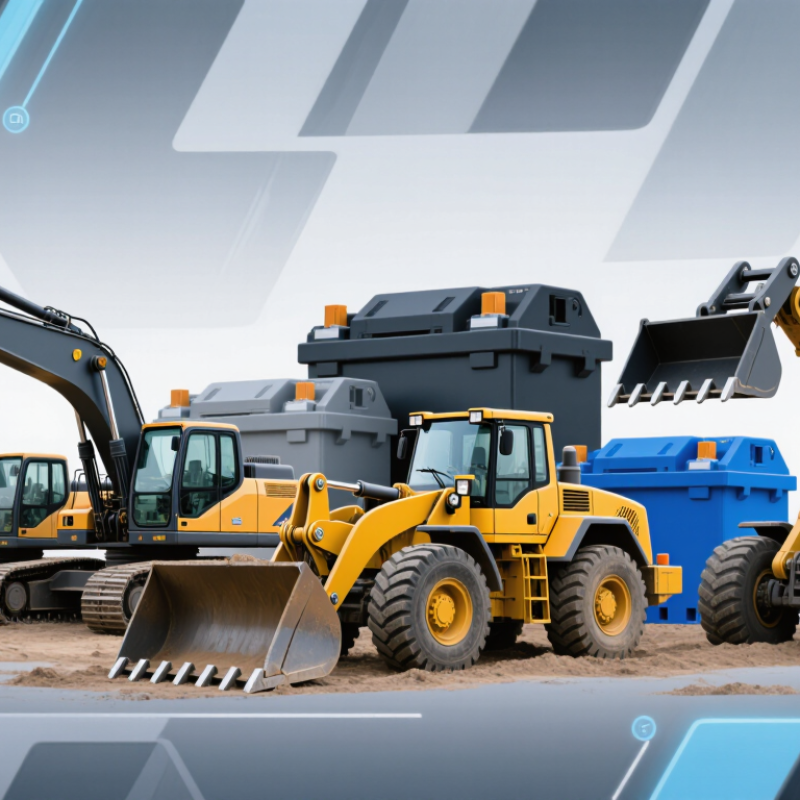
Top 10 Construction Equipment Battery Suppliers Worldwide

Construction Equipment Batteries: Types, Roles, and Operating Demands

Construction equipment batteries do more than start an engine. They also supply power to control units, lights, displays, and monitoring systems when the engine is off. Most machines use lead-acid batteries for dependable engine cranking, with flooded and sealed AGM designs suited to different maintenance needs. Lithium-ion options can reduce weight and support frequent cycling, but they are not automatic replacements; charging systems and temperature limits must match.

Small details matter. An excavator that sits overnight in freezing weather may need strong cold-cranking performance, while a wheel loader working repeated shifts places greater demands on charging and vibration resistance. Heat, dust, long idle periods, and loose terminals can shorten service life. Cold changes everything. Check the equipment manual for voltage, capacity, terminal layout, and required starting current, then consider the machine’s actual duty cycle. A larger battery is not always better if it cannot recharge fully. In practice, maintenance access and storage conditions can matter as much as a specification sheet suggests. That trade-off is easy to overlook. Regular inspection for corrosion, secure mounting, and weak charging helps catch problems before a machine is stranded on site.

How Battery Requirements Vary Across Construction Equipment

Battery requirements differ with the work, not just the machine’s size. A compact excavator often needs predictable power for stop-start digging and enough capacity for a full shift. A wheel loader may draw sharp bursts while lifting and accelerating. Meanwhile, a large haul truck needs high sustained output, robust cooling, and a pack designed for repeated heavy cycles. On a muddy site, vibration, dust, and limited charging access matter as much as rated capacity. They are easy to overlook.

Charging windows shape pack choices, too. A machine returning to a depot overnight can use a different setup from equipment expected to work through short breaks. The International Energy Agency’s Global EV Outlook 2024 reported an average battery-pack price of about $139 per kilowatt-hour in 2023, down 14% from 2022. That figure covers electric vehicles, not construction machinery, so it is a cost benchmark rather than a direct equipment comparison. Still, it highlights why buyers weigh usable capacity against purchase cost. In practice, comparing machines by kilowatt-hours alone can mislead; duty cycle, peak power, thermal management, and charging time deserve equal attention. Real sites are messy. A neat specification sheet cannot capture every shift.

Criteria for Comparing Global Construction Equipment Battery Suppliers

Comparing global construction equipment battery suppliers starts with the machine, not the catalogue. A compact excavator, wheel loader, and tower crane place different demands on energy storage. Check nominal voltage, usable capacity, peak discharge, and charging limits against the equipment’s actual duty cycle. A battery that looks adequate on paper may struggle during repeated hydraulic lifts or long shifts.

Field conditions matter. Ask for performance data across the temperatures the machine will face, plus vibration and shock testing relevant to rough sites. Review cycle-life figures carefully: test temperature, discharge depth, and charging method should be stated. Otherwise, comparisons are uneven. Check enclosure protection, thermal management, monitoring features, and how faults are reported. These details affect uptime, not just the specification sheet.

Supplier support deserves equal scrutiny. Confirm spare-part availability, technical response times, warranty exclusions, and whether service staff can diagnose problems remotely. Request traceable test reports and clear guidance on installation and charging. Then compare total ownership costs, including downtime and replacement labor, rather than purchase price alone. Numbers can mislead. I would still ask for references from equipment operating in similar climates; that evidence is useful, though it may not match every site.

Profiles of Ten Leading Construction Equipment Battery Suppliers Worldwide

Construction equipment battery suppliers differ in chemistry, pack design, and field support. These ten profiles describe capabilities to compare, not a strict ranking. One supplier may focus on proven lead-acid batteries for older fleets. Another may offer sealed designs that resist spills and reduce routine maintenance. A third may build lithium-based packs for machines that need frequent charging. Some specialize in cold-weather starting. Others tailor battery dimensions and connectors for equipment manufacturers. Details matter.

Further profiles include suppliers with battery management systems that track temperature and charge status, and firms that support replacement batteries across mixed fleets. A regional supplier may stand out through nearby service teams and available stock. A custom-pack specialist can address unusual voltage or space requirements. Another may emphasize vibration testing and reinforced enclosures. A final profile centers on end-of-life collection and material recovery. These are different strengths, not proof of equal performance.

Buyers should check documented test conditions, warranty terms, charging compatibility, and service coverage before comparing claims. Ask how a pack performs after repeated vibration, long idle periods, and temperature swings. Small print counts. A long rated life can be misleading if the test conditions differ from a real worksite. I would also compare total operating cost, not just purchase price. Yet reliable field data is not always easy to obtain, and that deserves closer attention.

Top 10 Construction Equipment Battery Suppliers Worldwide

Typical cell-level specific energy ranges for battery technologies used in equipment applications. This technology comparison is not a supplier ranking.

Values are indicative industry ranges in watt-hours per kilogram (Wh/kg). Actual performance varies by cell design, operating conditions, and manufacturer specifications.

Industry Trends Shaping Construction Equipment Battery Supply

Construction equipment battery supply is shifting from simple replacement packs toward application-specific energy systems. On a muddy site, an excavator may idle for hours, then demand high power during a short digging cycle. That pattern makes usable capacity, peak output, and recharge time equally important. No single chemistry fits every machine.

Suppliers are responding with higher energy density, improved thermal control, and pack designs that tolerate vibration, dust, and repeated charging. Some fleets are also adopting battery monitoring systems that track temperature, state of charge, and cell imbalance. Useful data. It can help maintenance teams schedule charging before a shift, rather than react to a stalled machine. Still, sensors cannot fix poor charging habits or undersized packs.

Another trend is closer coordination between equipment makers, battery assemblers, and charging-infrastructure providers. Standardized interfaces can simplify servicing, while modular packs may reduce downtime when a unit needs replacement. Procurement teams increasingly ask for cycle-life test conditions, warranty boundaries, and traceable material records. Those details matter more than headline capacity. Supplier comparisons remain difficult, though, because test methods and job-site conditions vary. A pack that performs well in a laboratory may behave differently in winter, under hydraulic loads, or with inconsistent charging. That is an uncomfortable limitation. Better field data is still needed.

Top 10 Construction Equipment Battery Suppliers Worldwide - Industry Trends Shaping Construction Equipment Battery Supply

The entries below describe supplier segments and regional capabilities, not named companies or a ranked market-share list. Battery chemistry, pack design, and availability vary by equipment model and market.

No. Supplier segment Common supply regions Typical battery offering Construction equipment relevance Industry trend shaping supply
1 Large-scale lithium-ion cell manufacturers East Asia, Europe, and North America Lithium iron phosphate (LFP) and nickel-based lithium-ion cells Supply cells for traction packs used in electric loaders, excavators, and other mobile machinery More regional production and sourcing diversification are intended to reduce logistics and supply-chain risk.
2 Heavy-duty battery pack integrators North America, Europe, and Asia-Pacific Cell-to-pack systems with enclosure, controls, and thermal management Integrate cells into equipment-ready packs designed for vibration, dust, moisture, and temperature variation Pack-level customization and validation are increasingly important as equipment platforms electrify.
3 LFP-focused battery suppliers Primarily Asia, with growing activity in other regions Lithium iron phosphate cells and packs; LFP cells have a nominal voltage of about 3.2 V per cell A potential fit for machines prioritizing cycle life, thermal stability, and frequent charging LFP adoption is supported by its materials profile and suitability for high-utilization applications.
4 Nickel-based lithium-ion suppliers East Asia, Europe, and North America Nickel-containing chemistries, including NMC and NCA variants May serve applications where energy density and available installation space are key design considerations Suppliers are balancing energy density, cost, durability, and raw-material sourcing in cell design.
5 Industrial lead-acid battery manufacturers Global production and distribution networks Flooded and valve-regulated lead-acid batteries; lead-acid cells have a nominal voltage of about 2 V per cell Commonly used for starting, lighting, and auxiliary power, rather than high-energy traction in many machines Established service networks and recycling systems continue to support demand for auxiliary batteries.
6 Battery management system and controls suppliers Global, with regional engineering and support teams Cell monitoring, pack protection, thermal controls, and state-of-charge estimation Support safe pack operation and integration with equipment controls and charging systems Connectivity and diagnostics are gaining importance for maintenance planning and fleet uptime.
7 Battery thermal-management suppliers Europe, Asia-Pacific, and North America Liquid or air-based cooling and heating components, depending on pack design Help maintain battery operating conditions during heavy loads and in hot or cold environments Thermal design is increasingly tailored to duty cycle, climate, charging rate, and pack configuration.
8 Regional battery module and enclosure manufacturers Local manufacturing hubs across major equipment markets Modules, housings, busbars, and pack assemblies built to customer specifications Provide mechanical and electrical adaptation for different machine layouts and service requirements Localized assembly can improve customization and shorten delivery routes for bulky battery systems.
9 Charging and energy-system suppliers Global equipment and infrastructure markets On-board chargers, off-board charging equipment, and site energy controls Connect battery specifications with charging time, work shifts, and available site power Charging infrastructure and grid capacity are becoming part of battery procurement decisions.
10 Battery distributors and service providers Regional dealer and aftermarket networks worldwide Replacement batteries, diagnostics, installation, and end-of-life collection Support maintenance, replacement planning, and battery return logistics for equipment fleets After-sales support, traceability, and recycling arrangements are increasingly considered alongside purchase price.