
Natural beauty for your favorite space

Top Container Unit Manufacturers in China

Choosing among the top Container Unit manufacturers in China takes more than comparing prices or browsing polished product photos. A unit may look sturdy in a catalog yet reveal uneven welds, poor door alignment, or thin coating once it reaches the site. Small details matter. Corner castings, floor support, roof drainage, and panel joints affect how a unit performs through repeated handling and changing weather.

This guide introduces key factors for evaluating Chinese manufacturers, from production capacity and customization options to quality checks and delivery support. Buyers may be sourcing site offices, modular accommodation, storage units, or larger prefabricated spaces. Each use calls for different specifications. A supplier’s ability to explain steel grades, insulation choices, electrical layouts, and inspection procedures can offer more useful evidence than broad claims about quality. Ask for drawings, sample specifications, and clear records of testing where relevant.

Experience still has limits. Factory visits, third-party inspections, and reference checks can help, but no single review guarantees a smooth project. I would not treat a low quote as proof of poor quality, or a long product list as proof of expertise. That judgment needs evidence. Compare manufacturers against the same requirements, including packaging, lead times, spare parts, and after-sales communication. Details can be missed, even by careful buyers. The aim here is not to declare one supplier right for everyone, but to help readers ask sharper questions and make a more informed shortlist.
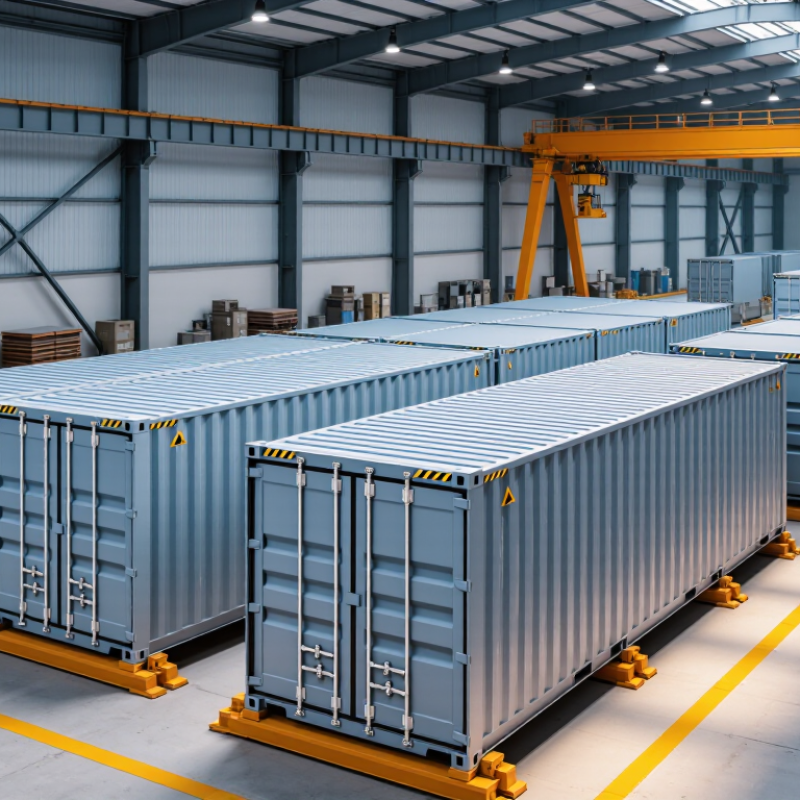
Top Container Unit Manufacturers in China

What Container Units Are and How China’s Manufacturing Industry Is Structured

A container unit is a reusable steel enclosure built to carry cargo between ships, trains, and trucks. Standard dry units have corrugated steel walls, corner fittings, and timber floors; refrigerated units add insulated panels and cooling equipment. Small details matter. A door seal, weld, or floor joint can affect weather resistance and service life. UNCTAD’s Review of Maritime Transport 2024 reports that global container port throughput reached 858.9 million TEUs in 2023. That scale helps explain why dependable dimensions and consistent production matter across transport networks.

China’s industry draws on broad manufacturing capacity, including steel processing, component supply, welding, surface treatment, and final assembly. These steps may take place across different facilities and industrial clusters, supported by transport links to ports. The National Bureau of Statistics reported that China’s manufacturing value added grew 5.0% in 2023, giving useful context for this industrial base. The figure covers manufacturing overall, not container production alone. This map is useful, but it can oversimplify: factory capability, inspection practices, and material quality vary. Buyers should look beyond output volume and examine specifications, corrosion protection, and quality records.

Key Factors for Evaluating Container Unit Manufacturers

Top Container Unit Manufacturers in China
Key Factors for Evaluating Container Unit Manufacturers

China’s container manufacturing capacity is only one part of a reliable sourcing decision. Buyers should check whether a factory can provide consistent steel specifications, qualified welding procedures, and traceable inspection records. The UNCTAD Review of Maritime Transport 2024 reports that global containerized trade reached about 159 million TEU in 2023, up 0.3% year over year. That modest growth still makes dependable equipment important across busy routes.

Look closely at materials and finished details. Ask for steel mill certificates, coating specifications, door-seal checks, and sample inspection reports. A container should sit level, open smoothly, and show even welds around corner fittings and panel joints. Request testing records against the relevant ISO requirements, then confirm the exact standards and test scope with an independent inspector. Paperwork helps, but it is not proof by itself. Check the actual unit.

Production capacity matters, but so do defect handling and delivery discipline. Ask how the manufacturer records repairs, manages rejected materials, and tracks serial numbers from fabrication to shipment. A factory tour can reveal practical habits: organized steel storage, calibrated gauges, and clear inspection points. Remote audits are useful, though they may miss small process gaps. I would not judge quality from a polished sample alone; repeatability across a production batch is harder to verify, and deserves more attention.

Top Container Unit Manufacturers in China: Key Factors for Evaluating Container Unit Manufacturers

Nominal external length is a practical specification to verify when comparing container units. The figures below show standard ISO container lengths, not manufacturer-specific data.

Reference: ISO 668 nominal external dimensions. Standard 20 ft containers are 6,058 mm long; standard 40 ft and 40 ft high-cube containers are 12,192 mm long. Confirm the applicable specification and dimensional tolerances when evaluating suppliers.

Leading Container Unit Manufacturers in China

Top Container Unit Manufacturers in China

Leading Container Unit Manufacturers in China

Leading container unit manufacturers in China are judged by more than production volume. Buyers should examine welding consistency, dimensional tolerances, corrosion protection, and the strength of corner fittings. These details affect how units stack, travel, and hold up outdoors. Ask for inspection records and clear specifications, not only polished catalog photos.

A capable manufacturer can explain its process in practical terms. For example, it should describe how workers check door alignment, seal roof joints, and protect cut edges from rust. Request sample measurements and confirm floor-load ratings suit the intended use. A factory visit can reveal workflow and storage conditions. If a visit is not possible, a live production walkthrough may help, though it is not a full substitute.

Small details matter. A stiff door can slow daily handling. A weak seal may let water reach stored goods. Compare quality-control steps, customization limits, delivery schedules, and after-sales support before choosing a supplier. Claims deserve evidence. Still, even a careful checklist can miss problems that appear after months of use. Buyers should leave room for uncertainty and plan a realistic trial order before scaling up.

Product Types, Customization Options, and Applications

Container units from Chinese manufacturers range from basic storage boxes to fitted offices, guard rooms, and modular accommodation. A simple unit may have a steel frame, insulated wall panels, and a lockable door. More specialized models can include windows, wiring, plumbing, air conditioning, or partitioned rooms. Keep it practical. The right configuration depends on site access, climate, and how often the unit will move. A coastal project may need stronger corrosion protection, while a cold-region office benefits from thicker insulation and well-sealed joints.

Customization can cover dimensions, door placement, floor finishes, lighting, and interior layouts. Buyers should provide a clear drawing and list of expected loads before production. Ask how the frame, wall panels, and electrical components are checked, and request material specifications and inspection records. Small details matter. A socket placed behind a cabinet is still a socket, but not a useful one. For repeated orders, confirm that later units will match the approved sample; color and fitting differences can occur if specifications are vague.

These units serve construction sites, farms, temporary classrooms, retail kiosks, and emergency workspaces. Before comparing manufacturers, consider transport limits, lifting points, installation time, and local service availability. A low purchase price can look attractive, yet extra site modifications may erase the savings. There is no perfect layout for every project, so leave room to review the plan with the people who will use the unit daily.

Top Container Unit Manufacturers in China - Product Types, Customization Options, and Applications

Container Unit Type Typical Configuration Common Customization Options Typical Applications Key Selection Considerations
General-Purpose Dry Container Enclosed steel unit with cargo doors at one end; commonly supplied in 20-foot and 40-foot formats. Door and ventilation arrangements, plywood or steel flooring, lashing points, paint color, labels, and lockbox options. Packaged goods, machinery, furniture, consumer products, and general international freight. Check payload and internal dimensions against the cargo, as specifications vary by model and manufacturer.
High-Cube Container Typically a 40-foot unit with approximately one foot more external height than a standard-height container. Custom door hardware, flooring, ventilation, lashing equipment, and cargo-specific interior fittings. Bulky or lightweight cargo, retail shipments, furniture, and loads requiring extra vertical clearance. Confirm route, terminal, and transport-equipment clearances before shipping.
Refrigerated Container Insulated unit with an integrated refrigeration system; operating temperature range depends on the unit specification. Temperature monitoring, remote data access, power-system options, interior fittings, and alarm configuration. Fresh and frozen food, pharmaceuticals, and other temperature-sensitive cargo. Verify the required temperature range, power supply, airflow needs, and monitoring requirements.
Open-Top Container Open roof covered with a removable tarpaulin or other specified cover; commonly used where top loading is needed. Removable roof bows, lashing points, cover arrangements, door-end options, and cargo-securing features. Oversized machinery, heavy equipment, and cargo loaded by crane from above. Check cargo height, lifting method, weather protection, and loading-gauge limits.
Flat-Rack Container Load platform with end walls that may be fixed or collapsible, depending on the design. Additional lashing points, end-wall configuration, reinforcement, and cargo-specific securing arrangements. Construction equipment, vehicles, pipes, and other wide or irregularly shaped cargo. Confirm concentrated-load limits, cargo dimensions, lashing plan, and route restrictions.
Tank Container Tank vessel mounted within a protective frame; design and equipment depend on the cargo and applicable regulations. Product-contact materials, insulation, heating equipment, valves, fittings, and safety accessories. Bulk liquids, food-grade products, and certain gases or chemicals when the tank is approved for the cargo. Match tank approval, materials, pressure rating, and cleaning requirements to the specific product and transport rules.
Side-Opening Container Enclosed container with side doors or panels designed to provide wider access than end doors alone. Door layout, access width, interior securing points, flooring, and protective finishes. Long or bulky cargo, warehouse storage, event equipment, and operations requiring side access. Check opening dimensions, door operation clearance, and cargo-securing requirements.
Special-Purpose Container Purpose-built unit configured for a defined cargo, operating environment, or site requirement. Insulation, service doors, partitions, electrical provisions, ventilation, access systems, and interior fit-outs. Industrial storage, mobile workshops, project logistics, and specialized equipment housing. Define the use case, applicable safety requirements, site conditions, and transport method before specifying the unit.

Specifications, available options, and regulatory approvals vary by container design and supplier. Confirm drawings, payload limits, dimensions, and certification requirements for the intended use.

How to Compare Manufacturers and Select a Supplier

Comparing container unit manufacturers in China starts with the unit’s intended use, not its quoted price. Specify external dimensions, payload, door design, floor type, and coating requirements before requesting offers. Ask for drawings and material specifications, then check whether the finished unit matches them. Look closely at weld consistency, door alignment, corner fittings, and floor joints. Small defects matter. Request production photos, inspection records, and a sample quality checklist. A factory visit or independent pre-shipment inspection can verify details that sales documents may not reveal. One limitation: a polished sample does not guarantee every production batch will match.

Compare suppliers on more than manufacturing capacity. Review lead times, defect-handling procedures, spare-part availability, and warranty terms. Ask how steel thickness and coating are measured, and how inspection results are recorded. UNCTAD’s Review of Maritime Transport 2024 reports that global maritime trade grew 2.4% in 2023, while projecting 2.0% growth for 2024. Such demand shifts make delivery commitments and production planning worth checking carefully. Request a dated schedule with material sourcing, fabrication, inspection, and dispatch milestones. Calculate total cost, including inland transport, protective packaging, and repairs—not just the unit price. Keep the evaluation practical. A low quote can still be the wrong choice if specifications are vague or corrective work is slow.