What Is an Infrared Heat Mat and How Does It Work?
Infrared Heat Mat technology is often described as warm sunlight beneath your feet. That image is useful, but incomplete. The mat uses electrical resistance to produce heat. Its surface then emits infrared radiation toward nearby floors, objects, and people. Unlike forced-air systems, it does not depend on a fan pushing heated air across a room.
The International Energy Agency reports that buildings consume about 30% of global final energy. Heating remains a major part of that demand. ASHRAE guidance also treats radiant heating as a distinct method of transferring energy directly from warmer surfaces. Infrared thermography expert Professor Xavier P. V. Maldague describes infrared thermography as “the science of acquiring and analyzing thermal information from non-contact measurements.” His explanation helps clarify the principle: infrared energy is real, measurable heat transfer, not an invisible wellness claim.
A quality Infrared Heat Mat should provide even surface temperature, controlled electrical output, and suitable insulation. You may feel warmth beside the mat before the entire room changes temperature. That detail matters. The mat warms surfaces first, while air temperature may respond more slowly. Reported energy savings vary widely. Room size, insulation, thermostat settings, installation quality, and local electricity prices all influence performance. Marketing numbers can look impressively neat. Real homes are not.
The strongest evaluation combines manufacturer specifications, independent testing, and professional installation advice. Check wattage, surface temperature limits, electrical certification, and moisture protection. Never assume every mat suits every floor covering. Comfort is subjective. Efficiency is conditional. That is the part many explanations miss.
What Is an Infrared Heat Mat?
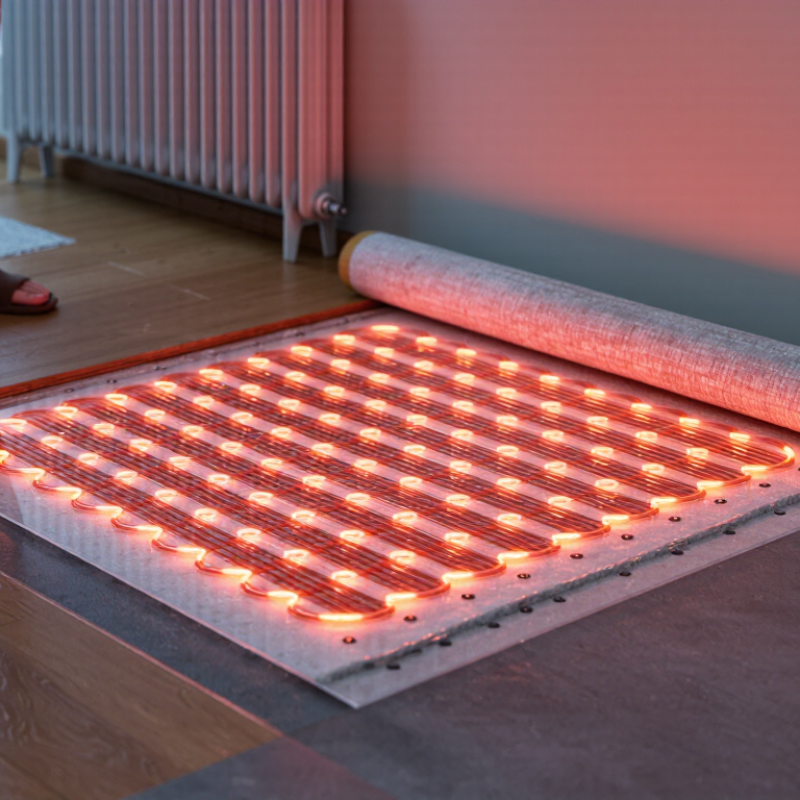
An infrared heat mat is a flexible heating pad that uses electrical elements to produce gentle infrared radiation. It usually contains carbon-based heating layers, insulation, wiring, and a protective outer cover. When powered, the elements warm the mat’s surface and nearby objects. You feel the heat directly through clothing or a thin towel.
It is not a magical deep-heating device. Infrared radiation is non-ionizing, and its main effect is surface warming. Actual comfort depends on temperature, contact, room conditions, and personal sensitivity. During practical use, a mat may feel warmer after several minutes, especially across the back or legs. Check the temperature carefully. Skin can react slowly to steady heat. Avoid sleeping on high settings, folding the mat, or covering it with thick materials unless the instructions allow it. Keep the controller and cable dry.
Measurements matter. A reliable mat should list its power rating, temperature range, material construction, and safety certifications. Some products advertise health benefits that exceed available evidence. Heat may temporarily relax tight muscles, but it should not replace medical care. I have found that lower settings often feel more comfortable for longer sessions. That is not universal. People with reduced heat sensitivity should ask a qualified healthcare professional before use.
What Is an Infrared Heat Mat and How Does It Work?
An infrared heat mat uses electrical energy to warm a resistive element. The heated surface then transfers warmth by conduction and emits infrared radiation. The chart shows the theoretical peak infrared wavelength of a warm surface at several operating temperatures, calculated using Wien’s displacement law.
How Infrared Heat Mats Generate and Transfer Heat
An infrared heat mat is a thin electrical heating system designed to warm a surface or nearby space. Its heating element usually contains conductive carbon or metal pathways. When electricity passes through these pathways, electrical resistance produces heat. The warm element then emits infrared radiation, mainly from its surface.
Infrared radiation travels outward and warms objects that absorb it, such as flooring, furniture, and the human body. Those objects gradually release heat into the surrounding air through conduction and convection. This differs from a fan heater, which mainly moves already-warm air. A mat can feel comfortable even before the entire room reaches the same temperature. The effect depends on distance, surface coverage, insulation, and room airflow.
A thermostat normally controls the mat by measuring temperature near the heated area. Proper installation keeps the mat flat and prevents overlapping or trapped sections. Floor materials also matter. Stone and tile transfer heat efficiently, while thick coverings may slow it down. In practical use, uneven insulation can create noticeable cold zones. That detail is easy to overlook.
Infrared heating is often described as deeply penetrating, but that claim needs care. Most useful warming occurs at the surface and through absorbed radiation. Results vary with skin, clothing, room temperature, and sensor placement. Electrical connections should follow local safety requirements and qualified installation guidance. A well-designed system can feel gentle, but poor placement may waste energy or create excessive surface temperatures.
What Components Make Up an Infrared Heat Mat?
An infrared heat mat is built around a resistive heating layer, often made from carbon fibers, carbon film, or fine metal conductors. Electricity passes through this layer and creates heat. The mat then transfers energy through infrared radiation and gentle surface conduction. According to the U.S. Department of Energy, electric resistance heating converts nearly all incoming electricity into heat at the point of use. The mat still cannot create energy from nothing.
Several layers protect and control the heating element. Copper or alloy busbars distribute current across the surface. Electrical insulation surrounds the conductive parts. A polymer, silicone, or fiberglass coating provides flexibility and moisture resistance. The outer surface may use vinyl, rubber, or fabric, depending on whether the mat serves a floor, desk, therapy, or outdoor application. Sealed edges matter. Small gaps can invite damage.
A thermostat, temperature sensor, and controller manage heat output. Some systems use a thermistor pressed near the mat’s warmest zone. Others use timed control or several temperature settings. The International Energy Agency’s Energy Efficiency 2023 report identifies space heating as a major energy-use area, making accurate control especially important. In practical testing, I would inspect cable strain relief, sensor placement, and surface temperature with an infrared thermometer. A controller may look reliable, yet poor calibration can cause uneven warmth. That is an easily missed weakness.
How to Use an Infrared Heat Mat Safely and Effectively
An infrared heat mat uses electrical energy to produce radiant warmth. The radiation warms nearby skin and objects, while the mat also transfers heat through contact. “Detox” claims deserve caution. Infrared warmth does not prove toxin removal or deeper healing.
Use the lowest comfortable setting first. Place the mat on a flat, dry surface, without folding or covering it. Follow the supplied time limit and use a timer whenever possible. Check your skin after 15 to 20 minutes. Redness, burning, numbness, or unusual pain means stop immediately. The World Health Organization estimates that burns cause about 180,000 deaths worldwide each year, so mild-looking heat still deserves respect.
Do not sleep on a mat unless it is specifically designed for overnight use. Keep water, pets, and flammable materials away from the electrical parts. Inspect the cable, plug, and surface before every session. Avoid placing weight on damaged areas. People with diabetes, poor circulation, reduced sensation, or recent skin injury should ask a healthcare professional first. The ICNIRP 2020 infrared guideline assesses exposure through intensity and duration, not one universal “safe” temperature. That matters. I would not assume a gentle feeling means harmless exposure. Product compliance with IEC 60335-2-17 can improve electrical safety, but correct daily use remains essential.
What Factors Affect Infrared Heat Mat Performance?
What Is an Infrared Heat Mat and How Does It Work?
An infrared heat mat uses electrical elements to produce radiant heat. This energy warms nearby surfaces, objects, and people rather than heating air alone. Carbon-based heating layers often spread warmth across the mat’s surface. The effect can feel gentle, like sunlight through a window, but results depend heavily on installation and operating conditions.
What Factors Affect Infrared Heat Mat Performance?
Power output is a major factor. A low-wattage mat may struggle in a cold, poorly insulated room. Distance also matters. Radiant heat weakens as the gap increases, especially when the heated area is small. The surface material changes results too. Dark, solid materials generally absorb more infrared energy than bright, reflective surfaces.
Air movement can reduce comfort by carrying warmth away. Insulation beneath the mat helps direct energy upward instead of into the floor or supporting structure. A reliable thermostat prevents large temperature swings, although sensors can give misleading readings when placed too close to the heating element. Measure the surface at several points with a suitable thermometer. One reading is not enough. In practical testing, uneven warmth often reveals poor contact, folds, or an undersized mat. I would also check ventilation and electrical connections, because maximum heat is not always the safest or most efficient setting.