
Natural beauty for your favorite space
How to Choose EV Charging Infrastructure for Your Business
Choosing EV Charging Infrastructure is not simply a matter of buying chargers. It means matching equipment to how people use your site, what your electrical system can support, and how much change you expect. A workplace may need steady daytime charging, while a retail location may depend on quick turnover near the entrance. Small details matter. The number of parking spaces, available power, cable reach, and weather exposure can all shape a workable plan.
Begin by estimating current demand and likely growth, rather than sizing a system around a hopeful guess. Review your site’s electrical capacity with a qualified professional, and identify any upgrades, installation constraints, or maintenance needs. Then compare charger types, network features, payment options, warranties, and support response times. Check how drivers will find and use the stations. A charger that looks impressive but is often unavailable serves nobody well. Ev Infrastructure should fit your operations, budget, and users—not just a sales forecast.
This guide explores the choices behind a practical charging plan, from site assessment and charger selection to costs and ongoing management. It also considers questions businesses can overlook, such as who handles repairs and how charging access may change over time. Even a careful forecast can miss. That is worth admitting. The aim is not to predict every driver’s behavior, but to make informed decisions, leave room to adjust, and build a system your business can reliably manage.
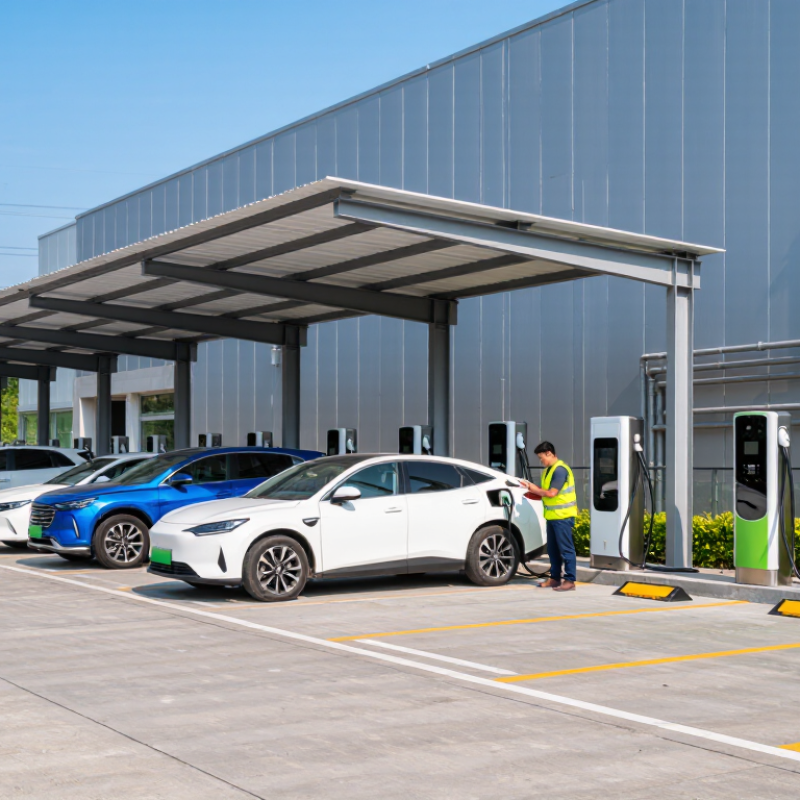
Assess Your Business’s EV Charging Needs
Start with how vehicles actually use your site. A hotel with overnight guests needs a different charging pattern from a depot where vans return briefly between shifts. Count likely EV drivers, daily parking hours, vehicle turnover, and the distance vehicles travel. Ask employees, tenants, or fleet managers about expected adoption, too. Estimates can be wrong; review them against real usage after installation.
The International Energy Agency’s Global EV Outlook 2025 reports that electric car sales exceeded 17 million worldwide in 2024, representing more than one in five new cars sold. This growth makes future demand worth planning for, but it does not predict demand at your location. Check electrical capacity with a qualified professional, and compare charging speed with dwell time. The U.S. Department of Energy’s Alternative Fuels Data Center notes that Level 2 charging typically adds about 10–20 miles of range per hour. That may suit an eight-hour workday, but not a vehicle parked for only 30 minutes.
Tips: Track parking occupancy by hour for several weeks. Note peak periods, not just daily averages. Ask drivers what range they need by departure. Leave room to expand, but avoid installing ports that may sit unused. A simple survey can miss quiet users. Look at actual parking patterns, too.
Compare Charger Types, Speeds, and Use Cases
For a workplace or hotel, Level 2 charging is often the practical starting point. The U.S. Department of Energy’s Alternative Fuels Data Center estimates it can add roughly 10–20 miles of driving range per hour, depending on the vehicle. That suits cars parked through a workday or overnight.
Level 1 uses a standard 120-volt outlet and adds range slowly, so it may fit long-stay parking with modest daily driving. Slow, but useful.
DC fast charging serves a different job. It can bring many compatible vehicles to 80% charge in about 20 minutes to an hour, though battery size, temperature, and vehicle limits affect timing. That makes it more suitable for highway stops, delivery hubs, and sites where vehicles return for short breaks.
It also needs greater electrical capacity and can bring higher installation costs. A charger’s peak rating is not the same as the speed every vehicle will receive.
Match charger speed to parking duration and turnover, then check local grid capacity before choosing quantities. The International Energy Agency’s Global EV Outlook 2024 reports that public charging points grew by 40% worldwide in 2023. That signals expanding access, not guaranteed demand at your site.
A tidy forecast can still miss shift changes or seasonal peaks. Review arrival times, dwell periods, and available power, then leave room to adjust.
Evaluate Site Capacity and Installation Requirements
Choosing EV charging infrastructure starts with an honest look at the site’s electrical capacity. Review utility bills, service-panel ratings, and peak building demand before selecting charger quantities. A panel that appears to have spare capacity may already be near its practical limit during busy hours. That matters.
Ask a qualified electrical contractor to assess the service, transformer, and likely load growth. If several vehicles may charge at once, model that demand against other equipment, such as kitchen appliances or HVAC systems. A site visit can also reveal details drawings miss: a long cable route, a crowded utility room, or pavement that makes trenching expensive. Leave room for uncertainty. Early estimates are not always accurate.
Installation needs shape the project just as much as electrical capacity. Map parking stalls, cable reach, accessible routes, and the distance to the power source. Check whether conduit can follow existing pathways or must cross landscaped areas. Consider drainage, lighting, protective barriers, and a safe place for maintenance crews to work. Small details add up. Ask installers to identify likely outages and provide a phased schedule, especially if the lot serves customers all day. Network coverage and future expansion deserve a check, too; it is easy to overlook them when focusing only on hardware. A site plan may still change after excavation begins, so keep contingency time and budget.
How to Choose EV Charging Infrastructure for Your Business — Evaluate Site Capacity and Installation Requirements
| Planning dimension | What to evaluate | Typical considerations | Why it matters |
|---|---|---|---|
| Vehicle dwell time | How long vehicles usually remain parked and how many need charging during the same period. | Workplaces and overnight fleets often have longer parking windows; customer and corridor sites may need faster turnaround. | Matching charging speed to parking time can avoid paying for more power than the operation needs. |
| Charger type and output | Compare AC Level 2 charging with DC fast charging, considering vehicle compatibility and expected usage. | Level 2 equipment commonly supplies about 3.3–19.2 kW at 208/240 V. DC fast chargers commonly range from about 50–350 kW per unit; actual vehicle charging rates vary. | The vehicle’s onboard charger, battery, and charging limits affect the power it can accept. |
| Available electrical capacity | Have a qualified electrical professional review service size, panel schedules, transformer capacity, and measured or calculated building loads. | A panel’s rated capacity is not the same as spare capacity. Available headroom depends on existing loads, operating conditions, and applicable electrical-code calculations. | Insufficient capacity may require load management, new distribution equipment, or a service upgrade. |
| Peak demand and load management | Estimate simultaneous charging needs and compare them with building peak demand and utility billing rules. | Managed charging can distribute available power across chargers or schedule charging for lower-demand periods, subject to equipment and site controls. | Controlling peak load may reduce electrical upgrade needs or demand-related costs, depending on the tariff and operating profile. |
| Utility service and upgrade timeline | Confirm service availability, utility requirements, transformer needs, metering, and any approval or construction lead time. | Requirements and timelines are site- and utility-specific; request a feasibility review early, particularly for high-power installations. | Utility work can affect project cost, design, and the date chargers can be placed in service. |
| Route length and civil work | Map the route from electrical equipment to parking spaces, including pavement, landscaping, drainage, and underground utilities. | Longer cable runs, trenching, boring, restoration, and required electrical equipment can increase installation complexity. | Locating chargers near suitable electrical infrastructure may reduce construction work, while maintaining safe vehicle and pedestrian circulation. |
| Parking layout and accessibility | Check stall dimensions, cable reach, curb and aisle conditions, accessible routes, signage, and local accessibility obligations. | Applicable accessibility requirements vary by jurisdiction and project; confirm them with the authority having jurisdiction during design. | A usable layout supports safe access and can prevent costly redesign after construction begins. |
| Permits and code review | Identify required electrical, building, fire, planning, and other local approvals before finalizing the design. | Codes and permitting processes depend on the location and adopted code editions. Electrical design should be reviewed by qualified professionals. | Early coordination helps align equipment selection, construction plans, inspection, and commissioning. |
| Networking and operations | Assess network coverage, payment or access needs, monitoring, software integration, and who will handle maintenance. | Connectivity options and service requirements differ by equipment and site; confirm coverage and ongoing fees before purchase. | Reliable operations support usage reporting, troubleshooting, access control, and future expansion. |
| Future expansion | Consider forecast vehicle growth, spare electrical capacity, conduit pathways, and space for additional equipment. | A phased installation may be practical when initial demand is uncertain, provided the site plan accounts for later work. | Planning for expansion can reduce repeat excavation and help keep later additions compatible with the site’s electrical design. |
Planning note: Power ranges are general examples, not a site design. Confirm equipment ratings, vehicle charging limits, utility requirements, and applicable codes with qualified professionals and local authorities.
Choose Charging Software, Payments, and Network Support
Choosing EV charging infrastructure also means choosing the software that keeps it usable. The International Energy Agency’s Global EV Outlook 2024 reports that public charging points grew by more than 40% in 2023, while fast chargers increased by 55%. That expansion makes reliable session management essential. Look for software that shows charger status, energy use, faults, and transaction records in one clear dashboard. Check whether it can export data and connect with your existing systems. A polished screen is not enough. Staff need to spot a failed unit quickly, not search through menus while drivers wait.
Payments and network support shape the daily experience. Confirm that drivers can see prices before plugging in and pay through practical options, including contactless cards where available. Ask how refunds, failed sessions, and disputed charges are handled. Then test support response times and escalation steps; a charger marked “online” may still fail to start a session. Network coverage and roaming can help visiting drivers, but extra access does not guarantee a smooth experience. A clean dashboard can hide a frustrating payment flow.
Tips: Before signing, run a pilot with real drivers. Test a declined payment, a network outage, and a support request. Record how long each issue takes to resolve. Choose clear reporting over feature lists. Check contract terms for data access, service levels, and exit procedures.
Plan Costs, Incentives, and Future Expansion
Charging infrastructure is a capital plan, not just a row of plugs. The IEA’s Global EV Outlook 2024 reports that public charging points worldwide grew by more than 40% in 2023, while fast chargers rose by about 55%. That signals a changing market, not guaranteed demand at your site. Start with a load study, utility capacity, trenching distance, and expected parking time. A charger beside a warehouse gate may need different power from one serving overnight staff. Price equipment, installation, networking, maintenance, and electricity demand charges separately. The last cost is easy to miss.
Build low-, expected-, and high-use budgets. Then test incentives against each case. The U.S. Department of Energy’s Alternative Fuels Data Center tracks federal, state, and utility incentives, but eligibility varies by location and project details. Confirm current terms with the relevant agency and utility before ordering. Keep records of quotes and assumptions. They may change. For future expansion, reserve panel capacity, conduit routes, and parking bays during initial construction. Install only the ports your forecast supports, and leave room for more. Forecasts will be wrong; revisit them after observing actual charging sessions and peak electrical demand.
