China Best Combination Sweeper Scrubber Manufacturers?
Choosing a China-based manufacturer for a Combination Sweeper Scrubber takes more than comparing catalog prices. Buyers need to understand how the machine performs on their actual floors, from dusty warehouse aisles to damp loading areas. Small details matter. Brush access, water-tank capacity, turning radius, and battery runtime can shape daily productivity.
This guide introduces practical ways to assess manufacturers without treating every product claim as proof. Check technical specifications against your cleaning area, shift length, floor type, and available service support. Ask how the supplier tests sweeping and scrubbing functions, and request clear information about replacement brushes, filters, squeegees, and batteries. A polished brochure helps, but it cannot replace a detailed demonstration or a usable maintenance plan.
Factory experience, quality-control procedures, export history, and customer references can offer useful evidence. Still, no single certificate or impressive showroom guarantees a good fit. Compare several suppliers, review warranty terms carefully, and confirm which features are standard rather than optional. If possible, test the machine on the kind of debris and flooring your team handles every day. That step can reveal limitations that specifications do not show. It may take time. Yet choosing carefully can reduce downtime and make cleaning routines more consistent. This overview will help buyers develop focused questions and identify manufacturers worth evaluating, while recognizing that the best choice depends on the site, workload, budget, and support requirements.
What Is a Combination Sweeper Scrubber?
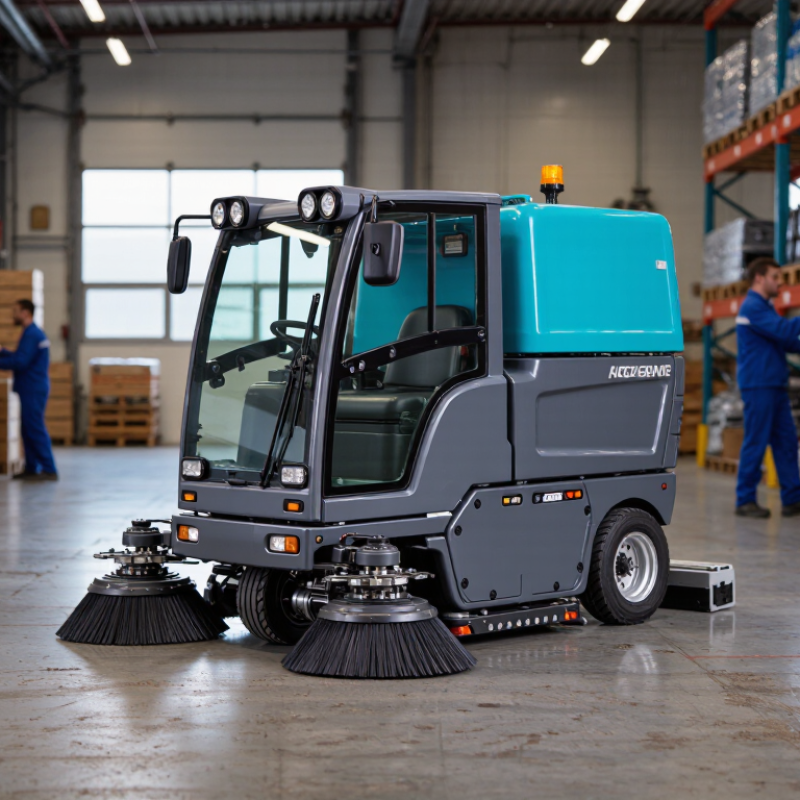
A combination sweeper scrubber is a floor-cleaning machine that collects loose debris and washes the surface in one pass. A front sweeping section gathers dust, grit, and small scraps into a hopper. Behind it, brushes loosen stuck-on soil while measured water and cleaning solution wash the floor. A rear squeegee then collects the dirty water into a recovery tank. Less residue is left behind.
This design can suit warehouses, workshops, supermarkets, and other large indoor spaces. For example, a machine can pick up cardboard fragments near a loading area, then scrub tire marks along a concrete aisle. The two actions save time compared with using separate equipment. Still, performance depends on the floor, soil, brush choice, and operator settings. A rough surface may need slower passes.
Before selecting a machine, consider aisle width, tank capacity, battery runtime, and access to service. These details affect daily work more than a headline cleaning rate. Empty the hopper and recovery tank regularly; neglected debris or dirty water can reduce cleaning quality. It is not magic. Fine dust, heavy spills, and corners may still need separate attention. I would test a unit on the actual floor before relying on its advertised coverage.
What a Combination Sweeper-Scrubber Does
Typical core functions by machine type
A combination sweeper-scrubber brings loose-debris pickup together with wet scrubbing and recovery of dirty solution in one machine. Dedicated machines focus on either sweeping or scrubbing; exact capabilities vary by model.
How Does a Combination Sweeper Scrubber Work?
How Does a Combination Sweeper Scrubber Work?
A combination sweeper scrubber handles dry debris and wet floor cleaning in one pass. Side brushes guide grit, leaves, and packaging into a debris hopper. Behind them, a brush or pad loosens tracked-in soil while metered solution reaches the floor. A rear squeegee gathers the dirty water, and a vacuum draws it into a recovery tank. The result is a cleaner, drier surface, though corners and heavy spills may still need attention. Not magic.
ISSA’s 540 Cleaning Times reference gives automatic scrubbing a planning benchmark of about 20,000 square feet per hour. Treat that as a starting point, not a promise: tight turns, heavy soil, refills, and operator speed reduce real output. The machine works best when its brush pressure, water flow, and travel speed match the floor. Too much solution can leave streaks; too little may leave soil behind. Check the recovered water and the squeegee trail during the first pass.
Tips: Sweep up bulky debris before wet cleaning, and empty the hopper before it overfills. Keep the squeegee blades clean. A quick test on a small patch can reveal streaking or poor pickup before the full shift.
What Features Distinguish Leading Chinese Manufacturers?
China Best Combination Sweeper Scrubber Manufacturers?
What Features Distinguish Leading Chinese Manufacturers?
Leading manufacturers stand out through practical engineering, not just impressive specifications. A well-designed combination machine sweeps loose debris before scrubbing, reducing the chance of grit spreading across a wet floor. Look for adjustable brush pressure, clear water-level indicators, and a recovery system that leaves minimal moisture behind. These details matter in warehouses, shopping centers, and workshops with different floor conditions. A quiet motor and a tight turning radius can also make daily cleaning easier. Specifications help, but they do not tell the whole story.
Tips: Request a floor trial. Check the pickup path, turning performance, and drying results on the surface you actually clean. Ask how quickly routine parts can be replaced.
Reliable manufacturers explain their testing process and can provide operating guidance, maintenance schedules, and access to spare parts. They should discuss battery run time under realistic workloads, rather than relying only on ideal figures. Ask about operator training and how service requests are handled. A polished demo is useful, but long-term support matters more. Even experienced buyers can overlook how narrow aisles or uneven flooring affect performance. I would not treat one machine as suitable for every site; matching its capacity and dimensions to the cleaning route takes careful review.
Which Chinese Manufacturers Make Combination Sweeper Scrubbers?
Chinese combination sweeper-scrubber manufacturers are typically industrial cleaning-equipment makers that build machines for collecting dry debris and washing floors in one pass. Some offer compact walk-behind models for narrow aisles, while others produce ride-on units for warehouses and large facilities. Manufacturing capabilities vary: one factory may design key systems, while another assembles sourced components. Ask what it makes in-house.
Compare suppliers through practical evidence, not catalog claims alone. Request a live demonstration on concrete with dust, grit, and a small water spill. Check brush pressure, hopper capacity, recovery-tank seals, turning radius, and runtime under load. Ask for service schedules, spare-parts details, warranty terms, and clear operating manuals. A video factory tour can help confirm production capabilities. Still, a polished specification sheet may not reveal awkward tank access or weak suction during daily use.
Tips: Match machine width to your narrowest aisle. Ask for a test on your actual floor type before ordering.
How Can Buyers Compare Manufacturers and Models?
Buyers comparing combination sweeper-scrubbers should look beyond headline cleaning speed. Grand View Research’s Floor Cleaning Machines Market report valued the global market at USD 5.48 billion in 2023 and projected continued growth. That figure signals demand, not product quality. Ask manufacturers for comparable test conditions and measured results.
Check cleaning width, debris-bin capacity, solution and recovery tank sizes, battery runtime, and turning radius. Match these figures to the site: a warehouse aisle needs different maneuverability from a broad production floor. Request a live trial on the actual surface, including corners and doorways. Watch for debris left behind and water that remains after a pass. Small details matter.
Calculate usable square meters per charge, labor hours per shift, and routine maintenance costs. Ask how quickly common parts are supplied and whether local technicians can service the machine. Compare warranty terms in writing. Numbers need context. A manufacturer’s stated productivity may assume ideal floors, steady speed, and no interruptions. One caveat: buyers can overvalue tank size while overlooking downtime. That is easy to miss. Test the model during a normal work shift, then compare the results across manufacturers.
China Best Combination Sweeper Scrubber Manufacturers? - How Can Buyers Compare Manufacturers and Models? | Comparison Dimension | Compact Walk-Behind | Mid-Size Walk-Behind | Compact Ride-On | Large Ride-On |
| Typical application | Small shops, corridors, and confined areas | Schools, clinics, and medium-sized commercial spaces | Warehouses and larger retail or facility floors | Large warehouses, logistics centers, and industrial floors |
| Typical cleaning width | About 500–700 mm | About 700–900 mm | About 900–1,200 mm | About 1,200–1,600 mm |
| Indicative practical productivity | About 1,000–2,000 m²/h | About 1,800–3,500 m²/h | About 3,500–6,500 m²/h | About 5,500–10,000 m²/h |
| Typical solution and recovery tank capacity | About 20–40 L | About 40–70 L | About 70–150 L | About 150–300 L |
| Typical battery operating time | About 1.5–3 hours | About 2–4 hours | About 3–5 hours | About 3–6 hours |
| Maneuverability | Best suited to narrow aisles and frequent turns | Good balance of access and coverage | Requires wider turning space than walk-behind units | Needs open routes and adequate door or aisle clearance |
| Key model checks | Overall width, brush access, battery removal, and operator effort | Brush pressure, tank access, squeegee design, and charge time | Turning radius, seat ergonomics, visibility, and ramp capability | Debris hopper capacity, filtration, service access, and transport dimensions |
| Manufacturer comparison checks | Request a live demonstration on the intended floor type; confirm cleaning and sweeping performance, parts availability, warranty terms, operator training, service response, battery and charger specifications, and compliance documentation for the destination market. |
| Figures are indicative ranges for comparing machine classes, not specifications for a particular manufacturer or model. Actual performance depends on floor conditions, debris, cleaning settings, battery condition, operator technique, and test method. Ask suppliers for documented specifications and a site-relevant trial. |