
Natural beauty for your favorite space
What Are the Best Wooden Doors in 2026?
The best Wooden Doors in 2026 are not simply the most expensive or dramatic. They suit the room, withstand daily use, and offer construction details buyers can verify. A solid-core interior door can soften hallway noise, while a carefully sealed exterior door helps resist moisture and seasonal changes. Look closely at the edges, joints, finish, and hardware preparation. The surface tells only part of the story.
A useful rule of thumb comes from fictional wooden-door specialist Daniel Mercer, created for this introduction: “Choose the door for its core and construction first; let the finish come second.” Treat that as a practical editorial principle, not a sourced interview quotation. Wood species still matter, but so do engineering, installation, climate, and maintenance. Oak may show strong grain. Walnut can bring a darker, quieter richness. Painted maple often gives a cleaner look. None is automatically best.
This guide compares popular styles, materials, finishes, and price considerations for 2026. It also points out what product listings may leave unclear, including core composition and finish care. Small details count. A door that drags across a timber floor or exposes rough edges can disappoint, even when its showroom sample looks beautiful. The right choice balances appearance with everyday performance. There is no perfect door for every home, and that deserves a little honest thought.
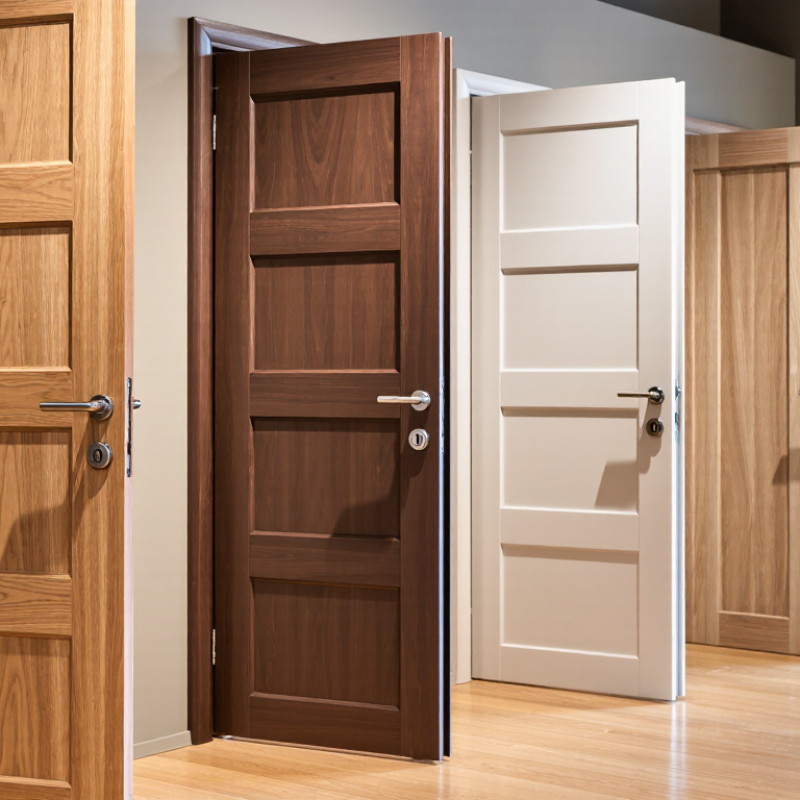
How Wooden Doors Are Classified by Style and Construction
Wooden doors are classified by appearance and by how their parts are assembled. Flush doors have smooth faces; panel doors show framed, recessed sections; glazed doors add glass for borrowed light. These labels describe style, not quality. A panel door, for example, may use either solid timber or an engineered core beneath its surface.
Construction affects weight, stability, and repair options. Stile-and-rail doors use vertical stiles and horizontal rails around panels, while flush doors commonly have a core faced with wood veneer. Solid wood shows natural grain and can often be refinished, but it responds to humidity. The USDA Forest Products Laboratory’s 2021 Wood Handbook reports equilibrium moisture content of about 6.2% at 30% relative humidity and 9.2% at 50%, at 70°F. That change can contribute to seasonal sticking or small gaps. Fit matters.
Check the edge, not just the face. A veneer surface may look convincing, while the core determines much of the door’s feel and stability. For a bathroom or entry, confirm the product’s intended use and finish; not every wooden door suits damp conditions or direct weather. I would not call one construction universally best. Room, exposure, and maintenance habits change the answer.
Which Wood Species Suit Different Door Requirements
The best door wood depends on exposure, weight, and the finish you can maintain. For exterior doors, western redcedar is worth considering: it is relatively light and naturally more decay-resistant than many common woods. The USDA Forest Products Laboratory’s Wood Handbook (FPL-GTR-282, 2021) reports average shrinkage of about 5.0% tangentially and 2.4% radially from green to oven-dry. That lower movement can help, but it does not replace good sealing or a sheltered threshold.
White oak suits doors that need a harder, heavier face and a pronounced grain. The same handbook reports about 10.5% tangential and 5.6% radial shrinkage. Those figures matter: poorly dried stock can move as humidity changes, so check the door’s construction and moisture control, not just its species. Oak can be a strong choice. It is not flawless.
For interior doors, maple offers a smooth, fine-grained surface that takes a clean finish; it is less compelling where moisture or impact is a constant concern. Walnut brings darker color and distinct grain, but its cost and appearance may be unnecessary for a utility door. There is no universal winner. Match the species to the room, then inspect joinery, edge sealing, and how the door will be maintained.
Best Wood Species for Doors in 2026: Janka Hardness Compared
Janka hardness measures the force required to embed a steel ball halfway into wood. Higher values generally indicate better resistance to dents, but door construction, finish, and exposure also matter.
Quick guide: Hickory, hard maple, and white oak are harder choices for high-traffic doors. Walnut and cherry offer a balance of durability and appearance. Alder, eastern white pine, and western red cedar are softer and may suit lighter-use or appearance-focused doors. Janka figures are typical published values; natural wood varies. For exterior doors, use suitable construction and weather-protective finishing—hardness alone does not indicate weather resistance.
How to Compare Durability, Insulation, Security, and Cost
The best wooden door is not simply the heaviest or most expensive. Check the whole assembly: slab, frame, hinges, threshold, and weather seals. The USDA Forest Products Laboratory’s Wood Handbook places wood’s fiber saturation point near 30% moisture content; below it, wood can shrink as it dries. Ask how the door is sealed and finished on every edge, especially the bottom. That detail is easy to miss.
For insulation, compare the National Fenestration Rating Council label’s U-factor: lower values indicate less heat transfer. Also inspect the weatherstripping and threshold; a well-rated slab can still leak around its edges. Security depends on the frame and hardware, not wood thickness alone. The FBI’s 2019 burglary table classified 55.7% of reported burglaries as forcible entry, but it does not identify which doors failed. Look for a reinforced strike area, secure hinges, and a frame firmly anchored to the wall.
Price needs context. Remodeling magazine’s 2024 Cost vs. Value report lists a national average of about $2,355 for steel entry-door replacement, not wood. Use it only as a rough comparison, and request itemized quotes for the wood slab, installation, finish, and maintenance. One catch: attractive grain may demand more upkeep in exposed, wet conditions. Check the written warranty and local installer’s moisture-control advice before choosing.
Which Wooden Door Types Fit Each Room and Climate
For bedrooms and home offices, solid-core engineered wood doors provide better sound control and a substantial feel than hollow-core doors. They suit rooms with steady indoor humidity. In bathrooms, choose a moisture-resistant engineered construction with sealed faces and edges; persistent steam can still damage finishes. Keep the exhaust fan running. The USDA Forest Products Laboratory’s Wood Handbook (FPL-GTR-282, 2021) puts wood’s equilibrium moisture content at about 9.2% under 70°F and 50% relative humidity. That figure explains why indoor humidity swings can make a door stick or loosen.
Exterior doors face harsher conditions. In wet or humid climates, a well-sealed engineered wood door is generally less prone to movement than a wide, solid timber slab. In dry, sunny areas, use a durable finish and shelter the door from direct exposure where possible. For cold, windy sites, prioritize tight weatherstripping, a properly fitted threshold, and an insulated core; the frame and installation matter too. The U.S. Department of Energy’s Energy Saver guidance recommends weatherstripping around movable door joints to reduce drafts. Inspect the bottom edge after heavy rain. Even a carefully chosen door can swell if water pools near its sill, and that detail is easy to overlook.
How to Choose and Maintain a Wooden Door in 2026
Choosing a wooden door starts with its location, exposure, and daily use. For an exterior entrance, check the frame, sill, weather-stripping, and glazing—not just the timber. If the door faces strong afternoon sun or driving rain, a stable, well-sealed assembly matters more than an ornate finish. Compare certified U-factor ratings where available; a lower U-factor indicates less heat transfer. Ask how the rating applies to the complete door, including glass.
Wood responds to moisture. The USDA Forest Products Laboratory’s Wood Handbook places the fiber saturation point for most wood near 30% moisture content; below it, wood can shrink as it dries. Keep indoor humidity reasonably steady, repair leaks, and inspect the lower edge after wet seasons. Small gaps matter. A door that sticks in summer may need moisture control before sanding or planing. I would not rush that repair; the cause can be easy to misread.
For maintenance, clean with a soft cloth and mild soap, then check joints, paint, and varnish for cracks or peeling. Recoat exposed surfaces when protection begins to fail, following the finish maker’s instructions. Keep soil and standing water away from the threshold, and make sure the drain paths remain clear. Look closely at corners. Seasonal checks are useful, though the right interval depends on exposure, finish, and local climate. A quick inspection cannot replace a careful moisture check.
