7 Best Cordierite Saggar Suppliers for Global Buyers?
Choosing a reliable Cordierite Saggar supplier requires more than comparing prices on a product page. Global buyers need stable dimensions, suitable porosity, and dependable performance under repeated kiln cycles. A saggar that looks flawless may still crack after several firings. That detail matters.
This guide reviews seven Cordierite Saggar suppliers serving international buyers. It focuses on manufacturing experience, material consistency, customization, quality control, and export support. Each supplier should be assessed against your actual process, including firing temperature, atmosphere, loading weight, and product shape. A small laboratory saggar may suit ceramic samples, while a deeper industrial model may be better for electronic components or advanced ceramics. Measurements tell the story.
Experienced manufacturers should explain their raw material blend, forming method, sintering process, and inspection standards. Buyers should request dimensional tolerances, thermal shock data, sample images, and recent test reports. Independent verification remains sensible, even when a supplier has impressive certifications. Supplier information can change. Product grades may also vary between batches.
The comparison considers communication quality, minimum order quantities, packaging, lead times, and after-sales support. These practical details often decide whether a shipment arrives ready for production. Still, no supplier is ideal for every application. A cheaper saggar may create higher replacement costs, while a premium option may exceed a smaller buyer’s needs. Careful sample testing is essential before placing a large order. This overview offers a starting point, not a substitute for technical validation.
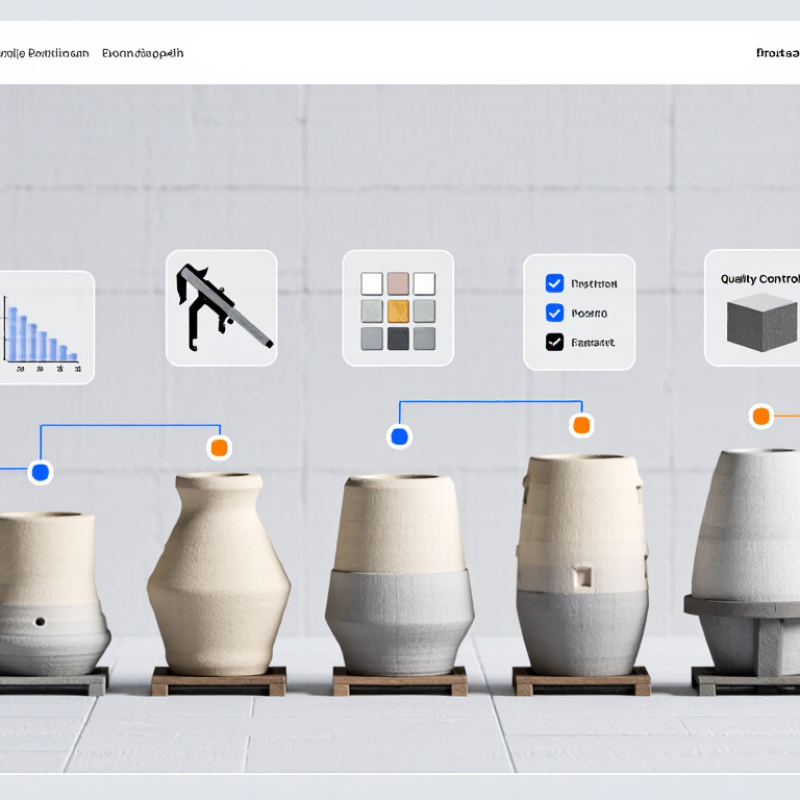
What Are Cordierite Saggars and Where Are They Used?
Cordierite saggars are kiln containers made from cordierite-based refractory material. They protect ceramic parts and powders during high-temperature firing. Their low thermal expansion helps them resist sudden temperature changes. This matters when kiln doors open or cooling cycles move too quickly. A saggar is not a forever container. Repeated firing can cause warping, cracks, and surface wear.
Manufacturers use cordierite saggars for ceramic capacitors, electronic components, pigments, porcelain, and advanced ceramic powders. They can separate products from kiln shelves and reduce contact with dust or flame. In battery-material processing, carefully designed saggars may support controlled calcination. However, performance depends on atmosphere, temperature, loading weight, and firing duration. Small differences can create large production problems.
Global buyers should ask suppliers for thermal expansion data, maximum service temperature, wall thickness, and dimensional tolerances. Material consistency matters. Check sample results before placing a large order. Experienced kiln teams also inspect corners, edges, and flatness after every cycle. That habit sounds simple. It prevents expensive surprises. A reliable supplier should explain forming methods, firing conditions, packaging, and replacement advice. Buyers should also verify export documents and packaging strength for long-distance transport. One point deserves reflection: the cheapest saggar may cost more when deformation interrupts an entire kiln load.
How to Evaluate Cordierite Saggar Suppliers Worldwide
Worldwide sourcing requires more than a low quotation. Evaluate cordierite saggar suppliers through material data, process evidence, and after-sales discipline. Ask for cordierite purity, apparent porosity, bulk density, thermal expansion, and maximum service temperature. These figures should match your kiln cycle, firing atmosphere, and product weight. Request recent test reports from an independent laboratory.
Supplier claims are not enough. Review dimensional tolerances, wall thickness, flatness, and corner quality on several production samples. One attractive sample may hide unstable molding. Check whether the supplier controls raw materials and records each firing batch. Traceability matters when cracks appear after repeated cycles.
An experienced evaluation also examines capacity and consistency. Ask how many pieces the facility makes monthly, and whether quality checks continue during peak orders. Clarify lead times, replacement procedures, export packaging, and responsibility for transit damage. Use a small trial order before approving a large contract. Measure warpage and cracking after actual use, not only on arrival. Keep photographs and kiln records. Then compare results with the supplier’s written specifications.
Reliable suppliers explain deviations instead of hiding them. Still, evaluation is rarely perfect. Some buyers overvalue certificates and undervalue communication. That mistake can become expensive. During video audits, inspect storage conditions, kiln maintenance, worker handling, and packing areas. Ask technical questions twice, using different wording. Consistent answers show process knowledge. Unclear answers deserve a slower decision.
How to Compare Supplier Quality, Capacity, and Certifications
7 Best Cordierite Saggar Suppliers for Global Buyers?
Compare quality, capacity, and certifications before accepting a quotation. Cordierite saggars should show stable dimensions, clean edges, and consistent wall thickness. Published ceramic materials data commonly place cordierite’s thermal expansion near 2–4 × 10⁻⁶ K⁻¹. Ask suppliers for thermal-shock results, firing temperature, water absorption, and batch records. A practical test uses samples from three production batches, not one carefully selected piece. Small details matter.
Capacity needs more than a monthly number. Request kiln size, daily output, tooling availability, drying time, and recent on-time delivery records. The European Commission’s Ceramics BREF identifies firing as a major energy and emissions stage. Therefore, ask how suppliers control kiln temperature uniformity and manage fuel interruptions. ISO 9001 helps, but it does not guarantee saggar performance. The ISO Survey 2022 reported 1,265,216 ISO 9001 certificates across 182 countries and economies. That scale shows certification is common, not automatically meaningful.
Look for ISO 14001 when environmental controls affect your procurement requirements. ISO/IEC 17025 accreditation is useful when test results come from an independent laboratory. Review certificate scope, expiry dates, audit findings, and traceability. I would still question polished paperwork. A supplier may have strong documents but weak corner strength. Compare dimensional inspection reports, replacement policies, packaging photographs, and trial-run results. The imperfect part is unavoidable: laboratory data may not reproduce your kiln’s atmosphere, loading pattern, or heating rate. Ask for a controlled pilot shipment.
How to Choose and Purchase the Right Cordierite Saggar Supplier
Choosing the right cordierite saggar supplier requires more than comparing prices. Grand View Research estimates the global advanced ceramics market will grow at about 4.8% annually through 2030. This growth increases supplier options, but quality may vary.
Request a technical datasheet showing cordierite content, dimensions, wall thickness, apparent porosity, and thermal expansion. A practical target is low thermal expansion, often around 1.5–3.0 × 10⁻⁶/K, depending on composition and firing conditions. Ask for recent test records, not only catalogue claims.
Inspect the supplier’s production experience with your kiln cycle, loading weight, and peak temperature. Send a sample firing profile before placing a large order. Check whether the saggar remains flat after repeated heating and cooling. It should not crack easily or contaminate the fired product.
The ISO Survey 2022 recorded more than 1.2 million ISO 9001 certificates worldwide, yet certification alone does not prove saggar performance. Evidence matters more.
Request batch traceability, inspection reports, packaging details, and replacement terms. Confirm export documents and moisture protection for long-distance shipping.
A small trial order is safer than a perfect-looking quotation. I would also compare three suppliers using the same test conditions. That comparison can expose hidden differences in warpage, service life, and delivery consistency.
Some purchasing teams overlook these details. That mistake becomes expensive.