
Natural beauty for your favorite space

2026 Best Bar Height Tables for Global Buyers

Choosing the right Bar Height Tables is not simply a matter of matching a finish to a room. Global buyers must weigh stability, materials, dimensions, shipping, and the way people will actually use each table. The market is broad. Grand View Research estimated the global furniture market at USD 678.7 billion in 2023, but that figure covers many product types; it does not measure demand for bar-height tables alone. That distinction matters.

Hospitality demand offers useful context. The National Restaurant Association’s 2024 State of the Restaurant Industry report projected U.S. restaurant sales of USD 1.1 trillion in 2024. This is a U.S. forecast, not a global sales figure, and it cannot predict which table styles will succeed. Still, it highlights the scale of the commercial setting where these tables may be used. A compact café may need easy-to-clean tops and a small footprint. A hotel lounge may prioritize sturdy bases, comfortable spacing, and finishes that suit frequent use.

Details can be easy to overlook. Check table height against the seat, inspect how the base supports the top, and confirm dimensions before comparing prices. A polished product photo can hide a wobbly base or a surface that marks easily. Not every listing provides enough detail. This guide compares practical options for global buyers, while noting where specifications, availability, and regional shipping terms should be checked directly with sellers.
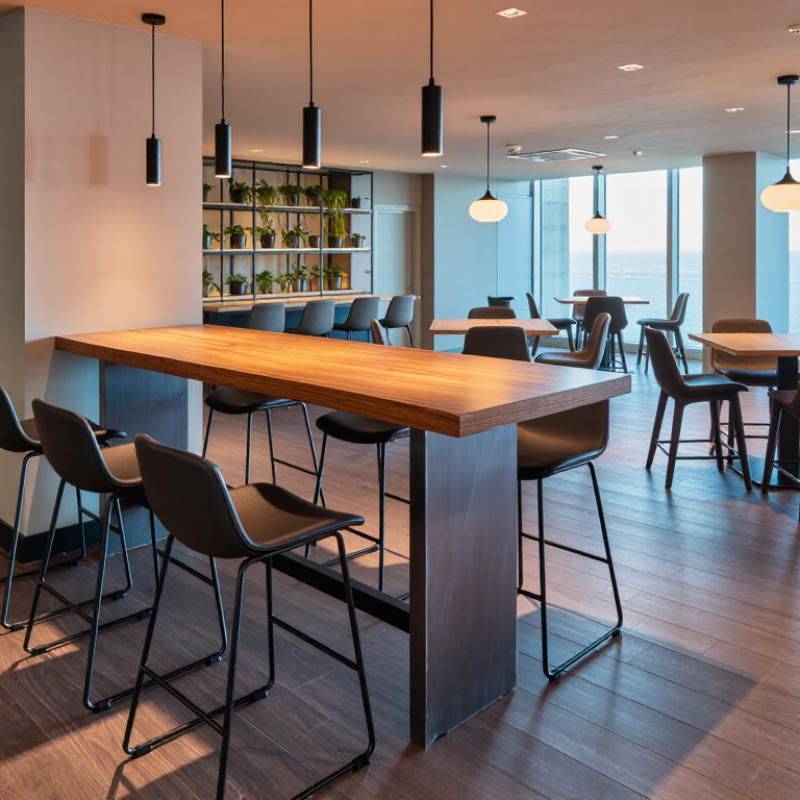
2026 Best Bar Height Tables for Global Buyers

What Defines a Bar-Height Table and Its Standard Dimensions

2026 Best Bar Height Tables for Global Buyers

A bar-height table is designed for standing use or seating on tall stools. Its standard height is usually 40 to 42 inches (102 to 107 cm), measured from the floor to the tabletop. That measurement matters. Product descriptions sometimes use “bar height” loosely, so confirm the actual dimensions before ordering.

Do not confuse bar height with counter height. Counter-height tables are generally 34 to 36 inches (86 to 91 cm), with stools that have 24- to 26-inch seats. For a bar table, a stool seat around 28 to 30 inches (71 to 76 cm) usually leaves comfortable legroom. Aim for roughly 10 to 12 inches between the seat and the tabletop’s underside. Allow about 36 inches of clear space around the table where possible, especially near walkways. Room layouts vary, though, and the same measurements may feel cramped in a narrow dining area.

Tips: Measure from the finished floor. Check seat height, not stool height. If possible, test the pairing; a few inches can change comfort more than expected. Labels are not always consistent.

Materials, Construction, and Design Options in 2026

For 2026 bar-height tables, material choice should follow the job, not the showroom photo. Solid wood offers warmth, but movement matters. The USDA Forest Products Laboratory’s Wood Handbook (FPL-GTR-282, 2021) places wood’s fiber saturation point at roughly 30% moisture content; below it, changing moisture can cause shrinkage. In a busy café, sealed edges and stable joinery matter as much as the species. Veneered plywood can reduce seasonal movement, while steel bases resist knocks and compact laminate suits frequent wipe-downs. No surface is invulnerable.

Design details affect daily comfort. A 40–42-inch tabletop generally pairs with a 28–30-inch seat, leaving room for knees and footrests. Check the overhang with an actual stool, not a drawing. ANSI/BIFMA X5.5-2021 covers strength, stability, and durability testing for desk and table products; buyers can request relevant test documentation. Ask about load capacity, fastener access, and replacement parts, too. A beautiful base that blocks a mop is a poor fit.

Sourcing deserves scrutiny. FAO’s Global Forest Resources Assessment 2020 estimates forests cover 4.06 billion hectares, about 31% of global land, but that figure alone says nothing about a table’s origin. Request traceable wood documentation and clear finish specifications. Matte finishes hide fingerprints better, though they may show scratches sooner. Samples help, but a small swatch cannot fully predict years of use.

How to Choose a Table for Different Spaces and Uses

A good bar-height table starts with its job, not its appearance. For quick meals, a compact top with wipe-clean edges may work well; for laptop use, prioritize stability and enough depth for a screen and cup. Typical bar tables stand about 40–42 inches high, while counter-height tables are usually 34–36 inches. Measure the chairs too: a seat roughly 10–12 inches below the tabletop often gives a comfortable starting point.

Clearance changes how usable the table feels. The National Kitchen & Bath Association’s Kitchen Planning Guidelines recommend knee-space depths of about 18 inches for a 30-inch-high table, 15 inches for a 36-inch counter, and 12 inches for a 42-inch bar. A footrest helps, especially during longer meals. In the United States, the U.S. Access Board’s 2010 ADA Standards specify accessible dining surfaces 28–34 inches high. That range may not suit every bar-style layout, so global buyers should check local accessibility requirements.

Measure the room with chairs pulled out, not tucked in. Leave enough circulation space for people to pass without turning sideways, and check door swings, columns, and nearby counters. A tall table can look perfect in a showroom and feel awkward beside a low window. Use masking tape to mark the tabletop footprint at home. Measure twice. These dimensions are starting points, not a substitute for testing the actual chair-and-table combination.

2026 Best Bar Height Tables for Global Buyers - How to Choose a Table for Different Spaces and Uses

Table Type Typical Table Height Common Top Size Suggested Seating Best Suited Spaces and Uses Buying and Planning Considerations
Counter-height table 34–36 in (86–91 cm) 24–36 in (61–91 cm) round or square Stool seat height: 24–26 in (61–66 cm) Kitchen islands, breakfast areas, casual dining corners, and smaller apartments Choose stools that leave about 10–12 in (25–30 cm) between the seat and the underside of the tabletop. Check the actual table apron height before ordering.
Standard bar-height table 40–42 in (102–107 cm) 24–36 in (61–91 cm) round or square Bar stool seat height: 28–30 in (71–76 cm) Home bars, pub-style dining, restaurant seating, and standing-height social areas Allow roughly 10–12 in (25–30 cm) from the stool seat to the tabletop underside. Confirm that the height suits the users and intended activity.
Compact two-person table Usually 40–42 in (102–107 cm) 24–30 in (61–76 cm) round or square 2 stools Studio apartments, small cafés, balconies, and narrow dining areas A round top can make circulation easier in tight layouts. Verify the base footprint and leave enough room to pull out stools.
Four-person square table Usually 40–42 in (102–107 cm) 36–42 in (91–107 cm) square 4 stools Casual dining rooms, game rooms, cafés, and shared break areas Check that each seated person has enough elbow room and that the table base does not obstruct knees or stool placement.
Four-person round table Usually 40–42 in (102–107 cm) 36–42 in (91–107 cm) diameter 4 stools Conversation areas, compact hospitality spaces, and informal meeting spots Round edges can help circulation around the table. Measure the full footprint, including stools when occupied.
Rectangular communal table Usually 40–42 in (102–107 cm) 60–72 in (152–183 cm) long × 30–36 in (76–91 cm) wide 4–6 stools, depending on spacing and table length Shared dining, cafés, collaborative work areas, and large kitchens Plan seating along the long sides and keep the ends clear if people need to move through the space. A longer top may require a stronger, more stable base.
Outdoor bar-height table Usually 40–42 in (102–107 cm) Commonly 24–36 in (61–91 cm) round or square Outdoor bar stools with a 28–30 in (71–76 cm) seat height Patios, terraces, garden dining, and outdoor hospitality areas Look for materials and finishes suitable for the local climate. Consider drainage, UV exposure, wind stability, and whether the table will be stored during severe weather.
Adjustable-height table Varies by model; confirm the full adjustment range Varies by model Must match the selected table height Multi-use rooms, flexible workspaces, and households with different seating needs Check the locking mechanism, base stability at maximum height, load capacity, and whether the table adjusts smoothly with the intended tabletop.

Planning note: Dimensions are common reference ranges, not universal standards. Product specifications and local accessibility, building, or hospitality requirements may differ. Measure the room, stool seat height, tabletop underside, and circulation space before purchase.

Key Buying Criteria for Global Buyers

For global buyers, the right bar-height table starts with measurements, not appearance. Check the finished table height against the stools you plan to use; a gap of roughly 25–30 cm between the seat and tabletop often feels comfortable. Then confirm the tabletop dimensions, leg clearance, and room around the table. A narrow café corner and a spacious hotel lounge need different proportions. Measure twice. Floor plans can be misleading.

Stability matters during daily use. Look for a sturdy frame, secure joints, and adjustable feet if floors may be uneven. Materials should suit the setting: sealed wood can be easier to wipe, while metal frames may handle frequent movement well. Ask how surfaces respond to heat, moisture, and cleaning products. Small details count. A glossy finish may show fingerprints more than expected.

For cross-border purchasing, request exact carton dimensions, net and gross weight, assembly instructions, and replacement-part availability. These details help buyers estimate storage, delivery, and installation needs before placing an order. Confirm the table’s stated materials and finish in writing, especially when ordering several units. Sample checks are useful, though one sample may not reveal every production variation. I would also verify packing protection around corners; they are easy to overlook. A low purchase price can become less attractive if assembly takes longer or transit damage is difficult to resolve.

International Standards, Shipping, and Supplier Evaluation

2026 Best Bar Height Tables for Global Buyers

International Standards, Shipping, and Supplier Evaluation

Bar height is not one universal measurement. Many tables stand about 40 to 42 inches tall, but buyers should confirm dimensions against local furniture conventions and intended seating. A few centimeters can change how comfortably a guest sits. Request measurements in both inches and centimeters, including tabletop thickness and clearance beneath the apron. Then compare them with a physical stool sample, not just a catalog image. Small details matter.

Shipping can alter the buying calculation. Ask suppliers for packed dimensions, gross weight, carton specifications, and pallet details before comparing freight quotes. A sturdy corner protector and moisture-resistant wrapping can prevent costly damage during long transit. For flat-packed tables, request assembly instructions and a trial assembly video. It is easy to overlook hardware. I have seen neat product samples arrive with unclear fitting steps; that gap deserves attention.

Evaluate suppliers through specific evidence, not confident promises. Request current production photos, material specifications, inspection criteria, and a sample packing report. Confirm lead times, replacement-part availability, and how defects are documented. Check destination-specific import and labeling requirements with a qualified shipping professional. A video call can reveal workshop conditions, though it cannot replace an independent inspection. Suppliers may not answer every question perfectly; record what remains uncertain before placing a large order.

2026 Best Bar Height Tables for Global Buyers — International Standards, Shipping, and Supplier Evaluation

Compare commonly used table-height ranges before specifying products for different markets.

Typical commercial furniture dimensions vary by market and product. The ADA range refers to dining and work surfaces covered by the 2010 ADA Standards, Section 902; it is not a universal bar-table standard. For supplier quotations, state finished height in millimeters, confirm measurement tolerances, and verify packaging dimensions and shipping volume.