
Natural beauty for your favorite space

What Is a Battery Server Rack and How Does It Work?

A Battery Server Rack is more than a cabinet filled with batteries. It is a managed energy system that supports servers when utility power fails or fluctuates. Inside, battery modules connect with a battery management system, power conversion equipment, monitoring sensors, and protective disconnects. Together, these components deliver stored direct current to an uninterruptible power supply. The UPS then provides stable power to servers, network switches, and storage devices. In a server room, this response happens within milliseconds. That speed protects active workloads from sudden voltage drops.

The demand is becoming harder to ignore. The International Energy Agency reported that data centers consumed about 240 terawatt-hours of electricity globally in 2022. Its Electricity 2024 analysis projects data center consumption could exceed 1,000 terawatt-hours by 2026. In the United States, Lawrence Berkeley National Laboratory estimated that data centers used 4.4% of national electricity in 2023, with their share potentially reaching 6.7% to 12% by 2028. These figures explain why reliable backup power matters. They also expose a weakness: battery capacity alone does not guarantee resilience. Thermal conditions, cell chemistry, maintenance quality, and load design can change real performance. Small details matter. A loose connection can create heat. Poor airflow can shorten battery life. The Uptime Institute’s outage research repeatedly links failures to power and cooling problems, not only equipment defects. This guide explains how a Battery Server Rack operates, where it fits in modern infrastructure, and which technical assumptions deserve closer review. No single design fits every facility.
What Is a Battery Server Rack and How Does It Work?

Battery Server Rack: Definition, Purpose, and Core Components

What Is a Battery Server Rack and How Does It Work?

Battery Server Rack: Definition, Purpose, and Core Components

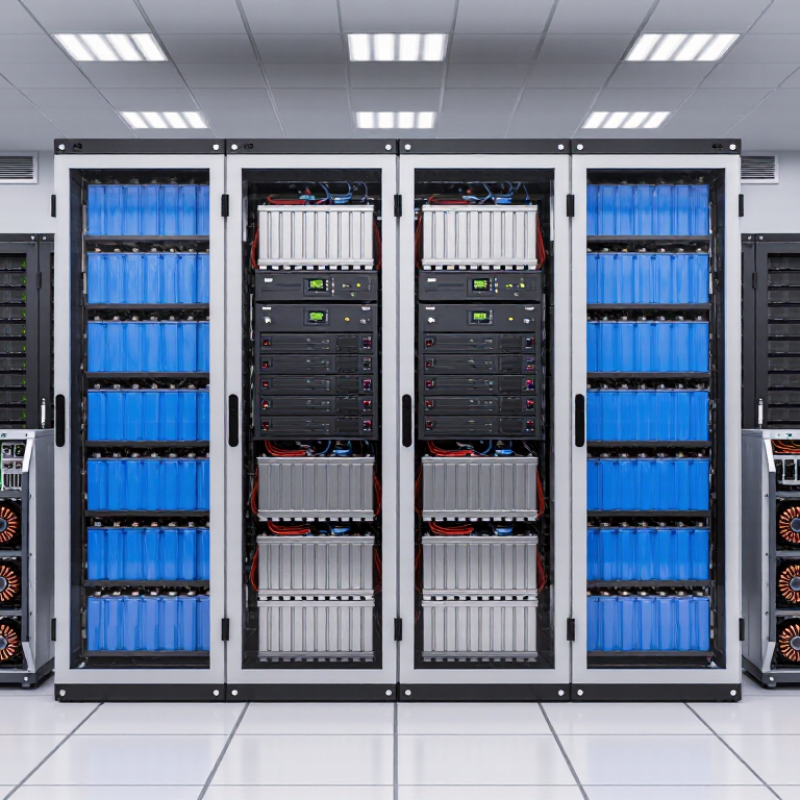
A battery server rack is a cabinet that stores electrical energy for servers and network equipment. It usually sits near the information technology load or inside a power room. During a grid failure, stored DC power moves through an inverter and supports the equipment. The transfer happens within milliseconds, helping prevent shutdowns and data loss. It is not simply a larger server cabinet. Its design combines electrical protection, monitoring, cooling, and service access.

The core components include battery modules, a battery management system, a DC bus, fuses, disconnects, sensors, and communication interfaces. The management system tracks voltage, temperature, state of charge, and cell balance. Some racks also connect with chargers, inverters, and backup generators. Lithium-ion systems offer high energy density, while other chemistries may suit different cost or safety requirements. The choice is rarely obvious.

Demand for dependable backup power is growing. The International Energy Agency reported that data centers consumed about 460 TWh of electricity worldwide in 2022. It expects this figure could exceed 1,000 TWh by 2026. In the United States, a 2024 Lawrence Berkeley National Laboratory report estimated data centers used 176 TWh in 2023. These figures explain why battery racks now support more than short outage protection. They can also help manage peak demand and stabilize power quality. Still, a rack can look perfect on paper and fail through poor ventilation, weak maintenance, or incorrect load calculations. Experienced operators verify real discharge performance, not only the nameplate rating.

How Battery Server Racks Store and Deliver Electrical Energy

A battery server rack stores electrical energy inside multiple battery modules arranged in a cabinet. Each module contains electrochemical cells, sensors, contactors, and safety controls. The battery management system measures voltage, temperature, and state of charge. It also isolates a weak or overheated module.

During normal operation, incoming electricity passes through a charger and replenishes the cells. During an outage, the system releases direct-current power to an inverter or UPS. The inverter then supplies stable alternating current to servers and networking equipment.

The transition happens within milliseconds.

Often, it is barely noticed.

The International Energy Agency reported in Electricity 2024 that data centers consumed about 460 terawatt-hours globally in 2022. Its analysis expects demand to exceed 1,000 terawatt-hours by 2026. This growth makes reliable energy storage increasingly important.

Battery racks help reduce short interruptions, support load shifting, and stabilize power during generator startup.

Thermal sensors and controlled airflow limit heat buildup between tightly packed modules.

However, battery performance declines with age, high temperatures, and repeated deep discharges. Real installations therefore need capacity margins, testing, and careful maintenance records. The U.S. Department of Energy’s 2023 Long Duration Energy Storage report also highlights efficiency, degradation, and lifecycle cost as practical design concerns.

A rack can look simple from outside.

Its reliability depends on thousands of small decisions.

That part is easy to underestimate.

Key Battery Technologies Used in Server Rack Systems

What Is a Battery Server Rack and How Does It Work?

Key Battery Technologies Used in Server Rack Systems

A battery server rack stores electrical energy and supplies backup power when the utility feed fails. Its batteries connect to an uninterruptible power system, which protects servers during voltage dips, outages, and generator transfers. Heat matters. Uptime Institute’s 2024 Global Data Center Survey reported that 54% of respondents experienced an outage costing more than $100,000. Battery selection therefore affects both uptime and operational risk.

Valve-regulated lead-acid batteries remain common because they are familiar, relatively inexpensive, and widely supported by service teams. However, they occupy more floor space and can lose capacity faster in warm rooms. Lithium-ion batteries provide higher energy density and longer service life. They also need battery-management systems, temperature monitoring, and carefully controlled charging. The U.S. Department of Energy identifies lithium-ion technology as a major force in stationary energy storage growth, but safety design cannot be treated as an afterthought.

Nickel-zinc batteries offer another option for compact server environments. They can support high-power discharge and avoid some thermal risks associated with lithium-ion chemistry. Yet their installed base is smaller, so replacement planning deserves more attention. That trade-off remains. Engineers should compare load profile, room temperature, discharge duration, maintenance skills, and recycling routes. IEEE Standard 1188 also stresses capacity testing and preventive maintenance for stationary lead-acid systems. A rack may appear healthy while hidden aging reduces runtime. Regular testing reveals that uncomfortable truth.

Safety, Cooling, Monitoring, and Power Management Features

A battery server rack is a cabinet that stores battery modules and delivers controlled electrical power. Its safety system begins with insulated compartments, circuit breakers, fuses, and emergency disconnects. These parts limit fault currents before damaged cells affect nearby equipment. Fire detection, smoke sensors, and clear service access add another layer of protection. Proper spacing matters. Crowded modules can trap heat and complicate maintenance.

Cooling keeps temperatures within the battery maker’s approved range. Racks may use filtered air, fans, or liquid cooling loops. Temperature sensors should measure both the modules and the surrounding cabinet. A small increase between two sections can reveal blocked airflow or a weak connection. During commissioning, technicians should check sensor readings against independent instruments. A quiet fan does not always mean healthy cooling.

Monitoring software tracks voltage, current, temperature, state of charge, and battery health. It can send alarms when values drift beyond set limits. Power management then balances charging, backup demand, and safe discharge rates. The battery management system can isolate a troubled module and protect the remaining units. No monitoring system catches every failure. Sensor calibration can slip, communication links can drop, and human review remains necessary. Regular inspection records make these weaknesses easier to find.

Installation, Maintenance, and Common Applications of Battery Server Racks

Battery server racks combine batteries, monitoring equipment, protection devices, and cabling in a structured enclosure. They support servers during utility failures and help prevent abrupt shutdowns. Common battery types include valve-regulated lead-acid and lithium-based systems. Each requires different safety controls, ventilation needs, and service procedures.

Installation begins with a load assessment and a review of the room layout. The floor must support the rack’s full operating weight. Technicians should leave service clearance around doors, terminals, and ventilation paths. Secure anchoring matters in areas exposed to vibration or seismic movement. Cables need clear labels, correct polarity, and protected routes. A qualified electrician should verify grounding and follow local electrical and fire requirements. Never place the rack where water leaks or excessive heat may occur.

Maintenance depends on the battery chemistry and monitoring system. Inspect terminals for looseness, corrosion, or unusual heat. Check alarms, readings, cabinet fans, and backup runtime during scheduled tests. Keep records of temperatures, voltage trends, inspection dates, and replaced parts. Do not rely only on a dashboard. Physical checks still catch problems. A useful field lesson is that neat wiring can hide poor airflow. I would rather allow extra clearance than force a crowded layout. Battery racks serve data centers, network rooms, hospitals, factories, and telecommunications sites. Their value is highest where even a short outage can interrupt critical operations.